Over the weekend I'll respond to some of the comments on my previous post which are stimulating all sorts of thoughts.
Today Jonathan (our minister for youth and young adults) and I had our ears pierced as a prelude to launching our Stop the Traffik Freedom Day activities. Having had a ring inserted by a highly competent young lady piercer, we hope to attach the Stop the Traffik keys to them on Sunday at our evening service.
We'll then wear them to advertise the fact that on 25 March we'll be celebrating the end 200 years ago of the transatlantic slave trade, lamenting the fact that we still benefit from this iniquitous trade and drawing attention to the fact that more people are trafficked today than were transported at the height of the trade that Wilberforce opposed and attempted to stop by Parliamentary action.
On 25 March we'll be on the High Street in Bromley drawing attention to the use of trafficked children in the production of chocolate, giving away fair trade bars and selling others. We'll be playing music, giving out leaflets, talking to people and welcoming a group walking from Keston - where the oak tree that Wilberforce sat under to seek inspiration - to our stand in the High Street. We're hoping that this small group will walk chained together for the four and half miles and hand out information explaining why they're doing it.
If you want to find out more about Stop the Traffik, visit their website at www.stopthetraffik.org
Friday, February 09, 2007

Monday, February 05, 2007
First thoughts on our discussions
Time to reflect on our discussions in church about belonging and stuff. It's been a good conversation so far for a couple of very simple reasons.
The first is that a lot of people are joining in. More are attending our mid-week central gathering than usual, others are emailing ideas or collaring us at church on Sunday to express a view or ask a question. This is all great - though collating it all and getting that disseminated to others is a challenge!
The second is that people are talking and listening to each other. There was a healthy degree of honesty last week and even disagreement that didn't descend into rancour. I had the sense of people expressing their view and then, on hearing a contrary view reasonably stated, pausing to reflect on whether they should amend their view. This is progress, I feel.
Over on Stuart Blythe's excellent Word at the Barricades, he reflects on whether we should count as members those who turn up to discuss and discern what God is saying to the church. I like this bottom-up, non-institutional approach. Stuart says:
I like his phrase 'communal discernment'. It strikes me that this is what congregational government ought to be about. It seems to me to be what Paul argues on 1 Corinthians 2 about us having the mind of Christ.
I do have an observation/question about it, however, and it's this: people seem to have a default position that they do not want to things they find comfortable and familiar to change. We want new people to join the church but we don't want the way we do church to be affected by that. So when those people gather to 'communally discern' they tend to think that God is interested in maintaining the status quo, the way we do things here. After all, at some point in our history, we have communally discerned that this is the right way to do things.
So it seems to me that the role leaders have in congregational government is to bring the bigger picture against which communal discernment now must take place. And that bigger picture is especially informed by scripture and culture and particularly the reading of scripture in the light of the cultural situation in which we must embody, incarnate our gathering called church.
So it seems to be that communal discernment has to be about hearing Christ in the scriptures and the wider world as well as about hearing Christ through one another gathered to chart a way forward.
The first is that a lot of people are joining in. More are attending our mid-week central gathering than usual, others are emailing ideas or collaring us at church on Sunday to express a view or ask a question. This is all great - though collating it all and getting that disseminated to others is a challenge!
The second is that people are talking and listening to each other. There was a healthy degree of honesty last week and even disagreement that didn't descend into rancour. I had the sense of people expressing their view and then, on hearing a contrary view reasonably stated, pausing to reflect on whether they should amend their view. This is progress, I feel.
Over on Stuart Blythe's excellent Word at the Barricades, he reflects on whether we should count as members those who turn up to discuss and discern what God is saying to the church. I like this bottom-up, non-institutional approach. Stuart says:
maybe members should be recognised as those who attend the meetings to share in
the discussing and discerning! To put that differently, if we consider that
the practice of communal discernment is important, if that is a conviction, let
us make it more important in practice not less.
I like his phrase 'communal discernment'. It strikes me that this is what congregational government ought to be about. It seems to me to be what Paul argues on 1 Corinthians 2 about us having the mind of Christ.
I do have an observation/question about it, however, and it's this: people seem to have a default position that they do not want to things they find comfortable and familiar to change. We want new people to join the church but we don't want the way we do church to be affected by that. So when those people gather to 'communally discern' they tend to think that God is interested in maintaining the status quo, the way we do things here. After all, at some point in our history, we have communally discerned that this is the right way to do things.
So it seems to me that the role leaders have in congregational government is to bring the bigger picture against which communal discernment now must take place. And that bigger picture is especially informed by scripture and culture and particularly the reading of scripture in the light of the cultural situation in which we must embody, incarnate our gathering called church.
So it seems to be that communal discernment has to be about hearing Christ in the scriptures and the wider world as well as about hearing Christ through one another gathered to chart a way forward.
Wednesday, January 31, 2007
Did Paul visit the flock?
I've also been listening to Sam's Town by the Killers and discovering a real depth to it.
I'm reading a book by James Thompson called Pastoral Ministry according to Paul: A Biblical Vision (Baker 2006). It came highly recommended, though I've never heard of Thompson. So far, it's pretty good. He's an NT man so it's a scholarly trawl of pastoral themes in the undisputed Paulines (don't you just love that phrase?! It really is high time someone disputed it - it's one of those givens of NT scholarship that is ripe for demolition.)
It's informed by the New Perspective on Paul (which is good) and majors on Paul's pastoral goal being transformation (a solid idea). I find myself reading it and saying 'yes, I agree with all this, but what I want to know is how did Paul do it - except by writing letters? What did his day look like? Did he visit people, lead Bible studies, preach sermons and chair church meetings?' I'm not sure Thompson is going to answer any of these questions. It's probably not fair to expect him to because that's not the purpose of the book.
But I'd love to know whether anyone has tackled these questions or whether (as I suspect) they are completely unanswerable. Post a comment if you can help or have more questions to add to my list.
AAAhhh ... 'The Kingdom of Doom' on The Good, the Bad and the Queen has just started. What a great track; fabulous strummed acoustic at the start, then the swirl of organ and 'Friday night in the Kingdom of Doom.' It contains the line 'drink all day/coz the country's at war/you'll be falling off the palace wall/I can't be anymore than I say/Oh in the flood we all get washed away.' Sublime.
Hoping to see the Anselm Kiefer exhibition at the White Cube next week or the week after.
I'm reading a book by James Thompson called Pastoral Ministry according to Paul: A Biblical Vision (Baker 2006). It came highly recommended, though I've never heard of Thompson. So far, it's pretty good. He's an NT man so it's a scholarly trawl of pastoral themes in the undisputed Paulines (don't you just love that phrase?! It really is high time someone disputed it - it's one of those givens of NT scholarship that is ripe for demolition.)
It's informed by the New Perspective on Paul (which is good) and majors on Paul's pastoral goal being transformation (a solid idea). I find myself reading it and saying 'yes, I agree with all this, but what I want to know is how did Paul do it - except by writing letters? What did his day look like? Did he visit people, lead Bible studies, preach sermons and chair church meetings?' I'm not sure Thompson is going to answer any of these questions. It's probably not fair to expect him to because that's not the purpose of the book.
But I'd love to know whether anyone has tackled these questions or whether (as I suspect) they are completely unanswerable. Post a comment if you can help or have more questions to add to my list.
AAAhhh ... 'The Kingdom of Doom' on The Good, the Bad and the Queen has just started. What a great track; fabulous strummed acoustic at the start, then the swirl of organ and 'Friday night in the Kingdom of Doom.' It contains the line 'drink all day/coz the country's at war/you'll be falling off the palace wall/I can't be anymore than I say/Oh in the flood we all get washed away.' Sublime.
Hoping to see the Anselm Kiefer exhibition at the White Cube next week or the week after.
Monday, January 29, 2007
Reading, listening and thinking
I'm listening to the Good the Bad and the queen - otherwise known as Damon Albarn's splendid solo album. Backed by some legendary musicians - Paul Simonon of the Clash, Simon Tong of the Verve and Blur's touring band and the great African drummer, Tony Allen - Albarn has served up a suite of songs about London past and present that are inspired and lovely, fragile and robust in equal measure. Great stuff. The man's by far the best British pop/rock artist of the last decade.
I'm reading The Passionate Church by Mike Breen as I think LifeShapes offers the best hope of getting discipleship and discipling written into the fabric of how we are church here. I'm also dipping into the wonderful Robert Jewett commentary on Romans now that a non-damaged copy has arrived. It's fabulous - well informed, provocative and beautifully written.
We're having a series of mid-week conversations about belonging and membership. The first was last week and went really well. We're inviting three home groups at a time to come and share their thoughts and insights.
I've become increasingly conscious over the past week of how linked all these things are (I know, I'm a slow learner but bear with me..!): belonging, discipleship, leadership, the worship life of the church and mission. The trouble is that we tend to treat them as discrete areas to be tackled by different groups at different meetings and I'm not sure which one to address first... And then I discover that actually they're all different sides of the same multi-sided (and therefore illegal) coin and we have top try to address them together.
In the lull between Christmas and New year, I drew up a list of things to address this year and all of those items were on it - along with get new chairs for the worship area so I don't keep putting my back out setting up for cafe church!
I shall sit back and let the lovely music wash over me....
I'm reading The Passionate Church by Mike Breen as I think LifeShapes offers the best hope of getting discipleship and discipling written into the fabric of how we are church here. I'm also dipping into the wonderful Robert Jewett commentary on Romans now that a non-damaged copy has arrived. It's fabulous - well informed, provocative and beautifully written.
We're having a series of mid-week conversations about belonging and membership. The first was last week and went really well. We're inviting three home groups at a time to come and share their thoughts and insights.
I've become increasingly conscious over the past week of how linked all these things are (I know, I'm a slow learner but bear with me..!): belonging, discipleship, leadership, the worship life of the church and mission. The trouble is that we tend to treat them as discrete areas to be tackled by different groups at different meetings and I'm not sure which one to address first... And then I discover that actually they're all different sides of the same multi-sided (and therefore illegal) coin and we have top try to address them together.
In the lull between Christmas and New year, I drew up a list of things to address this year and all of those items were on it - along with get new chairs for the worship area so I don't keep putting my back out setting up for cafe church!
I shall sit back and let the lovely music wash over me....
Tuesday, January 23, 2007
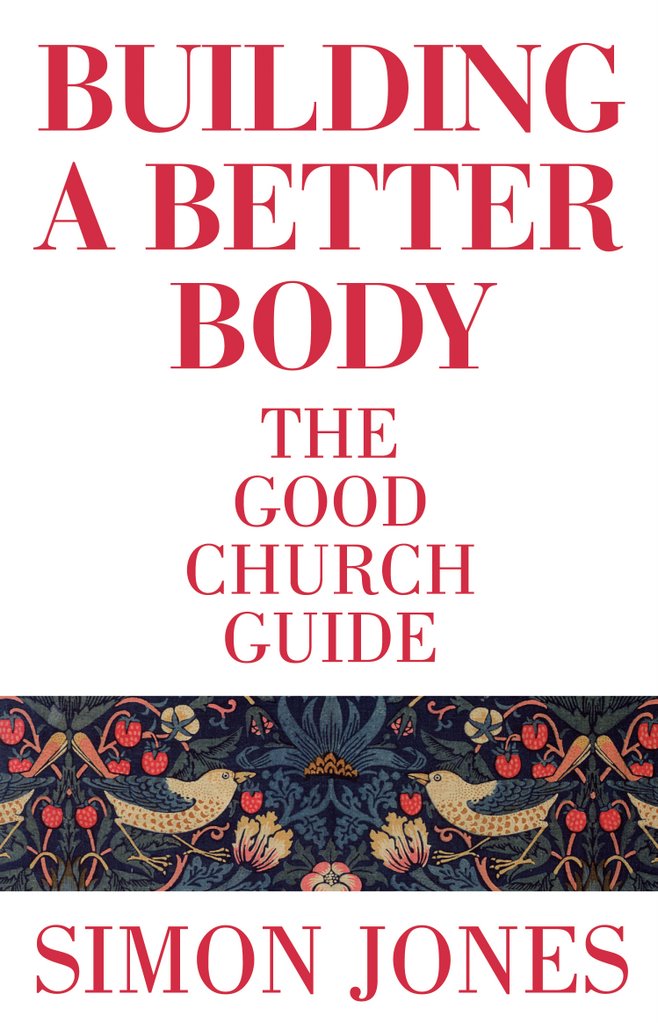
More on the picture on my cover
A friend who is well informed on art matters tells me that the image on my forthcoming book is by William Morris, the great Victorian designer. It's called The strawberry Thief and is based on drawings he made of birds stealing strawberries in the grounds of his home at Kelmscott Manor.
My informant, AJ, adds:
So, it's true that every picture tells a story.
My informant, AJ, adds:
So - what's the significance for your book? Well, as one of the founder membersI like that emphasis on honesty and the thought that good design can help create a better society. Maybe an honestly written book that takes the bible and those who struggle with the church seriously can help make better churches.
of the social and aesthetic Arts and Crafts Movement, Morris' passion was to
champion good design and craftsmanship at a time of increasing mechanisation and
mass production. For some, the movement involved fundamental issues about human society and there was a huge emphasis on 'honesty', on producing products that showed clearly what they were made of and how they worked. The whole movement believed in advocating simplicity and integrity, often emphasising plain
materials and good design...an approach which was to have a lasting influence on
modern design.
The Arts and Crafts movement also traced its origins back to John Ruskin's ideas. He believed that the beauty of medieval art sprang from pride in individual craftsmanship. Developing Ruskin's thoughts, Morris wrote that art was 'man's expression of his joy in labour' and believed that good design could help create a better society.
So, it's true that every picture tells a story.
Monday, January 22, 2007
New books
I've just heard from Authentic Media that my reworked Why Bother with Church? will be published on March 31 under the title of Building a Better Body: the Good church guide. Just in time for Spring Harvest.
And my Galatians book - Discovering Galatians in the Crossway Bible Guide series, a sister to Discovering Luke and Discovering the New Testament - ought to be available this week. I'm looking forward to seeing it...
And my Galatians book - Discovering Galatians in the Crossway Bible Guide series, a sister to Discovering Luke and Discovering the New Testament - ought to be available this week. I'm looking forward to seeing it...
Questions always come in threes
These conversations are helping to clarify my thinking - and at the same time raise even more questions (ah well, who said anything to do with church was simple?).
Into the belonging/membership/baptism matrix related questions to do with decision-making and legitimacy, the allocation of resources and the future shape of the church come creeping with all their potential to derail neat ideas.
BillyB -not the first member of my church to add his voice to this (but an astute observer all the same) - asks who has the hang up here - members, leaders or newcomers? The answer, I guess, is all three in different ways (though I'm not sure it's a hang up; I think it's a set of questions worth asking).
As a leader, the question for me arises in two specific areas. The first has to do with how we make decisions as a church. If most decisions rest with the church meeting which is attended by at best 20% of the membership, itself about 60% of the active and giving attenders of the church, what is the status of any of the decisions it makes?
How do we do congregational government in a way that takes account of the pressures on mortgage-paying, commuting, family raising Bromley people? I know that many will not be able to be able to make Wednesday evening gatherings - hence the Sunday meeting (but that only attracted a third of members).
So, I'd love to know how we can make use of new technology to have conversations between people who can't make a meeting in real space but can participate in cyberspace. Ideas on a post card or comment here, please.
The second reason it matters to me is that I've had conversations with non-members about joining where I've not been able to justify the intrusive interviewing method and reporting blind to a church meeting before we vote someone in. As one suggested to me, 'they get the right to see whether I measure up but I don't get to assess them in that personal way.' Others are reluctant to expose their life choices to the scrutiny of strangers for perfectly understandable reasons.
I think these are important questions to be asking and answering. It's not about replacing one tired and threadbare system of church organisation with one more attuned to our era that in turn will itself wear out. It's about asking what shape the church should be if it lives by the values of the gospel: how do we create community in a way that enables everyone who wants to be a follower of Jesus to feel welcome and at home, able to to get the resources they need to sustain their Christian discipleship in an increasingly complex environment?
The thought of getting an answer to these questions makes the conversation exciting and worthwhile.
Into the belonging/membership/baptism matrix related questions to do with decision-making and legitimacy, the allocation of resources and the future shape of the church come creeping with all their potential to derail neat ideas.
BillyB -not the first member of my church to add his voice to this (but an astute observer all the same) - asks who has the hang up here - members, leaders or newcomers? The answer, I guess, is all three in different ways (though I'm not sure it's a hang up; I think it's a set of questions worth asking).
As a leader, the question for me arises in two specific areas. The first has to do with how we make decisions as a church. If most decisions rest with the church meeting which is attended by at best 20% of the membership, itself about 60% of the active and giving attenders of the church, what is the status of any of the decisions it makes?
How do we do congregational government in a way that takes account of the pressures on mortgage-paying, commuting, family raising Bromley people? I know that many will not be able to be able to make Wednesday evening gatherings - hence the Sunday meeting (but that only attracted a third of members).
So, I'd love to know how we can make use of new technology to have conversations between people who can't make a meeting in real space but can participate in cyberspace. Ideas on a post card or comment here, please.
The second reason it matters to me is that I've had conversations with non-members about joining where I've not been able to justify the intrusive interviewing method and reporting blind to a church meeting before we vote someone in. As one suggested to me, 'they get the right to see whether I measure up but I don't get to assess them in that personal way.' Others are reluctant to expose their life choices to the scrutiny of strangers for perfectly understandable reasons.
I think these are important questions to be asking and answering. It's not about replacing one tired and threadbare system of church organisation with one more attuned to our era that in turn will itself wear out. It's about asking what shape the church should be if it lives by the values of the gospel: how do we create community in a way that enables everyone who wants to be a follower of Jesus to feel welcome and at home, able to to get the resources they need to sustain their Christian discipleship in an increasingly complex environment?
The thought of getting an answer to these questions makes the conversation exciting and worthwhile.
Friday, January 19, 2007
So, who are we?
One of the comments being made about our last family gathering is that there were very few non-members there - a handful at best. A couple of people have suggested that non-members probably wouldn't come unless they were given a personal invite - and there might be some truth in this, though I invited a couple of couples and neither of them came!
I wonder whether there is a residual feeling among those not in formal membership that it's not their place to participate in members' meetings. This suggests that perhaps there is something about our way of doing things that is distinctively baptist and that if you aren't a baptist, you don't feel safe or welcome coming to a members' meeting; and if you are a baptist from another church, you know not to come until you are a member.
There's been lots of intelligent stuff on the other baptist blogs - namely stuart's and Brodie's - that's been teasing out whether there is anything left of a distinctive baptist identity. Douglas McBain used to talk of many of the new churches being baptistic - in that they were largely independent, practiced believers' baptism and were low on liturgy.
One thing, of course, they were weaker on was any notion of congregationalism. And perhaps that is at the core of whatever we mean by baptist identity. I was intrigued top read Bishop Tom Wright's withering attack on a group of evangelicals in the church of England who have recently issued a covenant (the details of which are too complicated to go into!). Suffice to say that a key plank of Tom's attack is that the covenant is congregationalist which is not an Anglican value!
Sean Winter has written about this in his reflection on Baptist/Anglican conversations that have taken place over recent years. He argues that baptism is not the key divider between our traditions but the baptist insistence on congregational government and opposition to episcopacy (you'll have to check out Sean's beautifully nuanced argument on his blog and in his article on ambiguous genitives in Romans).
I wonder whether a key distinctive of our way of being church is that we seek to move forward together, having discerned the mind of Christ as a community (along the lines outlined in 1 Cor 2). This, of course, is why there always seems to be a tension in baptist churches around the roles of leaders and possibly why some baptists - whose sympathies lie more with the new churches - struggle with the church meeting.
I have a more practical struggle with the church meeting and that's attendance, representation and finding a model that works. Undoubtedly, our lunchtime gathering worked. We'll do it again. But it was still less than 50% of the membership. How do we hear the voices of those who are members but who do not come to church meetings? Have they excluded themselves from decision-making by not attending? But if we take that attitude, how will we persuade them to come on board with the direction the church has discerned from there Lord as it gathered?
Some of our younger families have expressed the view that we have too many church meetings, that leaders have been elected to lead and that only big decisions (not clearly defined) need to come to the church meeting. Maybe this has something going for it.
I also wonder how we might use the website for conversations about what the church is doing and where it's going. Maybe there's a place for virtual conversations in getting ideas aired and viewpoints expressed ahead of the church coming together to decide something. Perhaps ideas expressed online could be fed into the discussion when we gather.
We are certainly using our mid-week programme between now and Easter to talk about this whole issue of belonging, membership and baptism (I'll blog about that sometime soon) and those conversations will be recorded in some way so that wisdom expressed there is not lost to the wider discussions.
I wonder whether there is a residual feeling among those not in formal membership that it's not their place to participate in members' meetings. This suggests that perhaps there is something about our way of doing things that is distinctively baptist and that if you aren't a baptist, you don't feel safe or welcome coming to a members' meeting; and if you are a baptist from another church, you know not to come until you are a member.
There's been lots of intelligent stuff on the other baptist blogs - namely stuart's and Brodie's - that's been teasing out whether there is anything left of a distinctive baptist identity. Douglas McBain used to talk of many of the new churches being baptistic - in that they were largely independent, practiced believers' baptism and were low on liturgy.
One thing, of course, they were weaker on was any notion of congregationalism. And perhaps that is at the core of whatever we mean by baptist identity. I was intrigued top read Bishop Tom Wright's withering attack on a group of evangelicals in the church of England who have recently issued a covenant (the details of which are too complicated to go into!). Suffice to say that a key plank of Tom's attack is that the covenant is congregationalist which is not an Anglican value!
Sean Winter has written about this in his reflection on Baptist/Anglican conversations that have taken place over recent years. He argues that baptism is not the key divider between our traditions but the baptist insistence on congregational government and opposition to episcopacy (you'll have to check out Sean's beautifully nuanced argument on his blog and in his article on ambiguous genitives in Romans).
I wonder whether a key distinctive of our way of being church is that we seek to move forward together, having discerned the mind of Christ as a community (along the lines outlined in 1 Cor 2). This, of course, is why there always seems to be a tension in baptist churches around the roles of leaders and possibly why some baptists - whose sympathies lie more with the new churches - struggle with the church meeting.
I have a more practical struggle with the church meeting and that's attendance, representation and finding a model that works. Undoubtedly, our lunchtime gathering worked. We'll do it again. But it was still less than 50% of the membership. How do we hear the voices of those who are members but who do not come to church meetings? Have they excluded themselves from decision-making by not attending? But if we take that attitude, how will we persuade them to come on board with the direction the church has discerned from there Lord as it gathered?
Some of our younger families have expressed the view that we have too many church meetings, that leaders have been elected to lead and that only big decisions (not clearly defined) need to come to the church meeting. Maybe this has something going for it.
I also wonder how we might use the website for conversations about what the church is doing and where it's going. Maybe there's a place for virtual conversations in getting ideas aired and viewpoints expressed ahead of the church coming together to decide something. Perhaps ideas expressed online could be fed into the discussion when we gather.
We are certainly using our mid-week programme between now and Easter to talk about this whole issue of belonging, membership and baptism (I'll blog about that sometime soon) and those conversations will be recorded in some way so that wisdom expressed there is not lost to the wider discussions.
Monday, January 15, 2007
Further reflections on our lunchtime gathering
I think there's a limit to how many we can accommodate in the format we used on Sunday. About 130 sat down to soup and bread. We could probably have 30 or 40 more comfortably included. So this suggests that we could only get half our membership together for this sort of gathering.
So, could we do two sittings - one on one Sunday, the other the next? It's a possibility. What does it do to our concepts of the gathered body discerning the mind of Christ. On top of that, how do we accommodate friends and other committed people who aren't members.
One surprising aspect of the meeting was that only half a dozen folk who are not members in the formal baptist sense of that word came along, despite our stressing that everyone was welcome and there being quite a few active, committed people who aren't members.
I'd like to know why this was. I suspect that many felt they wouldn't have been welcome, would not really understand what was going on, wouldn't feel as though they could join. This is a shame because I'd have valued their contribution.
Out of yesterday's gathering, we have a scroll of belonging about ten feet long comprising lots of sheets of paper with jottings, notes and pictures glued on it, the fruit of the discussions over lunch that details people's thoughts on why they feel they belong at our church, what they like and dislike. Over the next couple of weeks, we'll collate all this data and feed it into our on-going discussions.
So, could we do two sittings - one on one Sunday, the other the next? It's a possibility. What does it do to our concepts of the gathered body discerning the mind of Christ. On top of that, how do we accommodate friends and other committed people who aren't members.
One surprising aspect of the meeting was that only half a dozen folk who are not members in the formal baptist sense of that word came along, despite our stressing that everyone was welcome and there being quite a few active, committed people who aren't members.
I'd like to know why this was. I suspect that many felt they wouldn't have been welcome, would not really understand what was going on, wouldn't feel as though they could join. This is a shame because I'd have valued their contribution.
Out of yesterday's gathering, we have a scroll of belonging about ten feet long comprising lots of sheets of paper with jottings, notes and pictures glued on it, the fruit of the discussions over lunch that details people's thoughts on why they feel they belong at our church, what they like and dislike. Over the next couple of weeks, we'll collate all this data and feed it into our on-going discussions.
Sunday, January 14, 2007
The meaning of life
Just left the BBC's ghastly new show The Meaning of Life - lots of air-headed celebs trying to make us think they know something about anything that matters. It makes grumpy old men look intelligent and bursting with insight!
Anyway, today we had our lunchtime church meeting and here are a couple of reflections on it.
firstly, it went really well. About 130 sat down to eat lunch and chat. The atmosphere was really good - people chatting with people they'd not spoken to before. In fact one table didn't get around to talking about the subject in hand because they were having such a good time getting to know each other.
Secondly, it was great to have a couple being voted into membership who were actually present at the meeting. It meant that everyone voting to have them as members knew what they looked like because they were standing there in front of them! In fact when I asked whether we should welcome them aboard, everyone applauded - which I took to be 'yes'.
I've had one email so far which was overwhelmingly ecstatic about the whole thing. So I think we'd have to say it was a success.
I think we made one basic error and that was moving from the hall where we had lunch into the worship area for the second half of the meeting. When we do it again, we won't do that; we'll stay put in the hall and have the whole meeting sitting round the tables - there's something about facing each other in small groups that opens people up and fuels conversation.
No doubt, I'll reflect some more during the week, but I'd say it was a really positive experience and I urge you to try it at your churches.
Anyway, today we had our lunchtime church meeting and here are a couple of reflections on it.
firstly, it went really well. About 130 sat down to eat lunch and chat. The atmosphere was really good - people chatting with people they'd not spoken to before. In fact one table didn't get around to talking about the subject in hand because they were having such a good time getting to know each other.
Secondly, it was great to have a couple being voted into membership who were actually present at the meeting. It meant that everyone voting to have them as members knew what they looked like because they were standing there in front of them! In fact when I asked whether we should welcome them aboard, everyone applauded - which I took to be 'yes'.
I've had one email so far which was overwhelmingly ecstatic about the whole thing. So I think we'd have to say it was a success.
I think we made one basic error and that was moving from the hall where we had lunch into the worship area for the second half of the meeting. When we do it again, we won't do that; we'll stay put in the hall and have the whole meeting sitting round the tables - there's something about facing each other in small groups that opens people up and fuels conversation.
No doubt, I'll reflect some more during the week, but I'd say it was a really positive experience and I urge you to try it at your churches.
The big day arrives
I was at the Mainstream conference this week in rain-swept Swanwick. We had a good time. Mike Breen and Ken McGreavy did the main sessions and were, on the whole, excellent. The seminar strand focused on discipleship and particularly Lifeshapes and, again, they were full of useful stuff. I'll blog about Lifeshapes later.
Since returning on Wednesday, I've found getting ready for today a bit like pulling teeth. It's taken ages for the sermon to come together - even though I have known in broad outline for a week or more what I want to say!
Today is also the day when we are holding our lunchtime church meeting. Around 150 people have signed up for lunch - and no doubt others will stay who have forgotten to do so. This means that there'll probably be twice as many adults there this lunchtime as there are at a normal Wednesday gathering. This in itself suggests it might be worthwhile repeating.
It'll be interesting to see the quality of conversation that happens and how many people who aren't yet members in the formal sense but who feel some sense of attachment or belonging to our community attend and participate. It'll be even more interesting to see how members - especially members of long-standing - respond to their contribution.
I think I'm looking forward to it - though I'm nervous too.
On another - tangentially related note - I see on Maggi Dawn's blog (www.maggidawn.typepad.com) that some Anglicans are getting nervous about their church leaders or employees blogging. As she says, blogs are a good place to float ideas and have conversations. They also give interesting insights into the character and interests of the blogger. I agree. They are not places where anything gets decided. I'm not sure I've said anything here that I haven't said to people in other contexts face-to-face. Since when has conversation been a bad idea?!
Since returning on Wednesday, I've found getting ready for today a bit like pulling teeth. It's taken ages for the sermon to come together - even though I have known in broad outline for a week or more what I want to say!
Today is also the day when we are holding our lunchtime church meeting. Around 150 people have signed up for lunch - and no doubt others will stay who have forgotten to do so. This means that there'll probably be twice as many adults there this lunchtime as there are at a normal Wednesday gathering. This in itself suggests it might be worthwhile repeating.
It'll be interesting to see the quality of conversation that happens and how many people who aren't yet members in the formal sense but who feel some sense of attachment or belonging to our community attend and participate. It'll be even more interesting to see how members - especially members of long-standing - respond to their contribution.
I think I'm looking forward to it - though I'm nervous too.
On another - tangentially related note - I see on Maggi Dawn's blog (www.maggidawn.typepad.com) that some Anglicans are getting nervous about their church leaders or employees blogging. As she says, blogs are a good place to float ideas and have conversations. They also give interesting insights into the character and interests of the blogger. I agree. They are not places where anything gets decided. I'm not sure I've said anything here that I haven't said to people in other contexts face-to-face. Since when has conversation been a bad idea?!
Thursday, January 11, 2007
Campaigning irony
Stuart Blythe in a quite brilliant post over at word at the barricades (www.thewordatthebarricades.typepad.com/ look for the entry called 'perplexed'), has put his finger on why I have misgivings about the current campaign by some Christians against the sexual orientation regulations. And it has to do with my reading of acts 3 - i love it when things look joined up!
Stuart suggests that it is somewhat weird for Christians to be campaigning for the right not to serve people. Read that sentence again if you haven't picked up the irony. We're called to serve everyone, just as God does, so why should we be looking for exemptions on the basis of our disapproval of certain people's lifestyles?
Remember that Luke's first readers would almost certainly have assumed that the man at the gate of the temple (Acts 3:1-10) was morally deficient as well as disabled. They would have seen his disability as evidence that his lifestyle did not measure up to their high standards, that he did not have a good character.
Peter and John did not look for a reason not to serve him. Rather, despite knowing precious little about him - except that he couldn't walk - Peter swept the man up into the story of God's saving activity in the world.
Shouldn't it be our joy to serve all people of all kinds in the hope that through our service they catch a glimpse of the God who causes his sun to shine on all?
Stuart suggests that it is somewhat weird for Christians to be campaigning for the right not to serve people. Read that sentence again if you haven't picked up the irony. We're called to serve everyone, just as God does, so why should we be looking for exemptions on the basis of our disapproval of certain people's lifestyles?
Remember that Luke's first readers would almost certainly have assumed that the man at the gate of the temple (Acts 3:1-10) was morally deficient as well as disabled. They would have seen his disability as evidence that his lifestyle did not measure up to their high standards, that he did not have a good character.
Peter and John did not look for a reason not to serve him. Rather, despite knowing precious little about him - except that he couldn't walk - Peter swept the man up into the story of God's saving activity in the world.
Shouldn't it be our joy to serve all people of all kinds in the hope that through our service they catch a glimpse of the God who causes his sun to shine on all?
Friday, January 05, 2007
Belonging and standing on our two feet
We're kicking off a new series in Acts next week. Called Shoved by the Spirit, we're looking at how the early followers of Jesus made it up as they went along - made up how to do church, how to do mission, how to live for Jesus in the world in the power of the Spirit.
Of course they were inspired by the Spirit and, of course, they had the teaching of Jesus still ringing in their ears. But all the same, they were doing what no one had done before - creating a community of people based on their common love of Jesus.
I've been reading the first great story in Acts - the healing of the lame man. I've been getting to grips with an article by mikeal C Parsons from the Journal of Biblical Literature (it's on line at the Society of Biblical Literature website if you want to read it - it's in volume 124 number 2, 2005. The whole issue is downloadable for free)
Parsons shows how Luke plays with our ideas of disability and inclusion. In the ancient world it was assumed that disabled and disfigured people showed in their outward appearance a moral disfigurement or weakness. All the philosophers thought this - even Plato and Aristotle. It was an idea that hung around for a long time. In C J Sansom's wonderful Shardlake novels, his hero - Matthew Shardlake - is a hunchback and frequent reference is made to the fact that many in Tudor England assumed he was in some way cursed or not to be trusted.
It interests me - this story has long been one of my favourites - because what Peter does is so instinctive. You get no sense of him and John chatting over the implications of reaching out to this man. Peter just does it - he picks him up, heals him in Jesus' name and welcomes him into his company. Parsons reminds us that the lame man does not speak at all; he is the recipient of mercy and inclusion.
So what does this story say about belonging and mission? Lots. I guess key among them is that Luke is telling us that through Jesus a new community is being created where everyone, regardless of their background and moral or physical state, is welcome.
As Parsons says: 'The lame man moves from inactivity to walking, from paralysis to praise. He also moves from sitting to clinging (Acts 3:11) to standing unassisted, alongside Peter and John. Thus he shares in the 'boldness' of the apostles (4:13)...Even though he does not speak, the lame man's boldness is seen in his 'body language' as he boldly takes his stand in solidarity with the persecuted apostles.'
To the crowd gathered as a result of the miracle, was the formerly lame man part of the community Peter and John led? They'd certainly have seen it that way. He belonged to the followers of the way of Jesus. Yet Luke tells us nothing about his faith other than he praised God for his healing.
I have long used this story to talk about social ministries that I've been involved in over the past 15 years or so. Everyone is welcome to taste the benefits of the Kingdom of God - the early Christians were living equal opportunities long before anyone else had thought of it! Can we live up to their example?
The story for me puts the issue of belonging (and membership and all that stuff) firmly into the context of mission. Who belongs? Anybody who wants to - indeed considering Peter and John's action, anyone that we reach out to and pull into our community!
More thoughts along soon.
Of course they were inspired by the Spirit and, of course, they had the teaching of Jesus still ringing in their ears. But all the same, they were doing what no one had done before - creating a community of people based on their common love of Jesus.
I've been reading the first great story in Acts - the healing of the lame man. I've been getting to grips with an article by mikeal C Parsons from the Journal of Biblical Literature (it's on line at the Society of Biblical Literature website if you want to read it - it's in volume 124 number 2, 2005. The whole issue is downloadable for free)
Parsons shows how Luke plays with our ideas of disability and inclusion. In the ancient world it was assumed that disabled and disfigured people showed in their outward appearance a moral disfigurement or weakness. All the philosophers thought this - even Plato and Aristotle. It was an idea that hung around for a long time. In C J Sansom's wonderful Shardlake novels, his hero - Matthew Shardlake - is a hunchback and frequent reference is made to the fact that many in Tudor England assumed he was in some way cursed or not to be trusted.
It interests me - this story has long been one of my favourites - because what Peter does is so instinctive. You get no sense of him and John chatting over the implications of reaching out to this man. Peter just does it - he picks him up, heals him in Jesus' name and welcomes him into his company. Parsons reminds us that the lame man does not speak at all; he is the recipient of mercy and inclusion.
So what does this story say about belonging and mission? Lots. I guess key among them is that Luke is telling us that through Jesus a new community is being created where everyone, regardless of their background and moral or physical state, is welcome.
As Parsons says: 'The lame man moves from inactivity to walking, from paralysis to praise. He also moves from sitting to clinging (Acts 3:11) to standing unassisted, alongside Peter and John. Thus he shares in the 'boldness' of the apostles (4:13)...Even though he does not speak, the lame man's boldness is seen in his 'body language' as he boldly takes his stand in solidarity with the persecuted apostles.'
To the crowd gathered as a result of the miracle, was the formerly lame man part of the community Peter and John led? They'd certainly have seen it that way. He belonged to the followers of the way of Jesus. Yet Luke tells us nothing about his faith other than he praised God for his healing.
I have long used this story to talk about social ministries that I've been involved in over the past 15 years or so. Everyone is welcome to taste the benefits of the Kingdom of God - the early Christians were living equal opportunities long before anyone else had thought of it! Can we live up to their example?
The story for me puts the issue of belonging (and membership and all that stuff) firmly into the context of mission. Who belongs? Anybody who wants to - indeed considering Peter and John's action, anyone that we reach out to and pull into our community!
More thoughts along soon.
Table talk
Thanks to Wulf for his comments. Stuart's blog can be found at http://www.thewordatthebarricades.typepad.com/ and is well worth checking out.
As to how we're organising our Sunday gathering, the aim is to have lunch and have people talking as they eat in small-ish groups. There'll be some feedback there and then with groups invited to tell everyone else where their conversation's going. We'll also be inviting groups to make notes, draw pictures, etc which we'll gather up at the end so we can produce a record of the conversations to provide stimulus for further conversations.
There will also be a more formal section of the meeting as there are items of business that have to be done - though we're hoping these will be done in the same convivial spirit as the round table chat.
As with all experiments, we're not sure what'll happen. But i'm very excited at the prospect of doing something new that is potentially much more inclusive.
As to how we're organising our Sunday gathering, the aim is to have lunch and have people talking as they eat in small-ish groups. There'll be some feedback there and then with groups invited to tell everyone else where their conversation's going. We'll also be inviting groups to make notes, draw pictures, etc which we'll gather up at the end so we can produce a record of the conversations to provide stimulus for further conversations.
There will also be a more formal section of the meeting as there are items of business that have to be done - though we're hoping these will be done in the same convivial spirit as the round table chat.
As with all experiments, we're not sure what'll happen. But i'm very excited at the prospect of doing something new that is potentially much more inclusive.
Thursday, January 04, 2007
New year, continuing conversations
Happy new year everyone.
Had a great break in Devon - stormy, windy, hail(!) but great company and it was good to be away from the desk and computer.
The pre-Christmas conversations about membership and community have resumed. We are planning to have a series of gatherings to talk about the issue between now and Easter, giving members and friends of the church the chance to express their views and share their insights.
I've been interested to read on Stuart Blythe's blog some thoughts about baptism as this is surfacing as a key issue to consider as we think about membership. Some reckon that baptism is a non-negotiable - by which they mean the immersion of believers - while others think we need to treat other traditions seriously.
I must confess that I am increasingly undecided on tbe issue. I used to be strongly of the view that immersion was essential and baptism was the door through which everyone had to go in order to be a full member of the church.
Questions include - what does the New Testament mean by baptism? what was the practice of the early church? what did our baptist forbears do? what does baptism as a ritual mean to people in today's world? I'm not sure what the answers are to any of these questions - but intend to think about it over the next few weeks.
This Sunday we're having our first lunch time church family meeting at which non-members will be welcome. We're having a conversation over the lunch tables about what belonging means to us which will include the children as well as their parents. I'm looking forward to it.
Had a great break in Devon - stormy, windy, hail(!) but great company and it was good to be away from the desk and computer.
The pre-Christmas conversations about membership and community have resumed. We are planning to have a series of gatherings to talk about the issue between now and Easter, giving members and friends of the church the chance to express their views and share their insights.
I've been interested to read on Stuart Blythe's blog some thoughts about baptism as this is surfacing as a key issue to consider as we think about membership. Some reckon that baptism is a non-negotiable - by which they mean the immersion of believers - while others think we need to treat other traditions seriously.
I must confess that I am increasingly undecided on tbe issue. I used to be strongly of the view that immersion was essential and baptism was the door through which everyone had to go in order to be a full member of the church.
Questions include - what does the New Testament mean by baptism? what was the practice of the early church? what did our baptist forbears do? what does baptism as a ritual mean to people in today's world? I'm not sure what the answers are to any of these questions - but intend to think about it over the next few weeks.
This Sunday we're having our first lunch time church family meeting at which non-members will be welcome. We're having a conversation over the lunch tables about what belonging means to us which will include the children as well as their parents. I'm looking forward to it.
Sunday, December 24, 2006
Christmas thoughts and greetings
It's Christmas Eve - one of my favourite days of the year. This year being a Sunday, it'll also be a busy one. We have two services and this afternoon will be serving mince pies, mulled (non-alcoholic) wine, tea and coffee to shoppers wending their way home, inviting them to pause and worship with us.
This evening I'm reflecting on Joseph - the 'redundant groom' in John Bell's wonderful phrase. I'm looking at what the Christmas story might say to ordinary, decent blokes.
I'd intended to focus on Jo already but my train of thought was sent off in a more focussed direction by Timothy Garton Ash's column in the Guardian last Thursday where he reports going to Christmas services, finding them moving but not believing a word of it. More than that, he finds the story and the person behind it has nothing to say to his life or to the world in which he lives it.
I'll reflect on that this evening. It's worth reading - everything by Garton Ash is.
I'll also be referring to Bill Mallonee's Christmas album. Bill, former front man of the Vigilantes of Love, has penned some beautiful songs over the years; he is the most thoughtful and searching of Christian singer songwriters. Check Yonder Shines the Infant Light out - a snip at £5.50 to download - and especially listen to the beautiful Every Father Knows, a meditation on the power of the Christmas story to reach the lost wherever they are. You'll find it at www.billmallonee.net - you won't be sorry.
I'll return to membership, community and mission in the New Year. In the mean time have a great Christmas everyone. I hope you all meet Jesus in the midst of the celebrations and that you know his presence with you throughout 2007.
This evening I'm reflecting on Joseph - the 'redundant groom' in John Bell's wonderful phrase. I'm looking at what the Christmas story might say to ordinary, decent blokes.
I'd intended to focus on Jo already but my train of thought was sent off in a more focussed direction by Timothy Garton Ash's column in the Guardian last Thursday where he reports going to Christmas services, finding them moving but not believing a word of it. More than that, he finds the story and the person behind it has nothing to say to his life or to the world in which he lives it.
I'll reflect on that this evening. It's worth reading - everything by Garton Ash is.
I'll also be referring to Bill Mallonee's Christmas album. Bill, former front man of the Vigilantes of Love, has penned some beautiful songs over the years; he is the most thoughtful and searching of Christian singer songwriters. Check Yonder Shines the Infant Light out - a snip at £5.50 to download - and especially listen to the beautiful Every Father Knows, a meditation on the power of the Christmas story to reach the lost wherever they are. You'll find it at www.billmallonee.net - you won't be sorry.
I'll return to membership, community and mission in the New Year. In the mean time have a great Christmas everyone. I hope you all meet Jesus in the midst of the celebrations and that you know his presence with you throughout 2007.
Thursday, December 21, 2006
Dark Fire and Happy Feet
I finished C J Sansom's Dark Fire last night. It's his second Matthew Shardlake mystery set in 1540 around the time of the fall of Thomas Cromwell.
It's not only a rivetting thriller, gloriously well written, but it's also based on a sound reading of the events surrounding the demise of the King's right hand man in reform. He has some interesting things to say about faith on the way through as well - which I'll leave you to find out for yourselves.
The family went to see Happy Feet last night - the eco cartoon about a dancing penguin. It's great fun! There are one or two plot gaps but the animation and characterisation are terrific and we all left the cinema wanting to adopt a penguin (it'll pass!)
It's not only a rivetting thriller, gloriously well written, but it's also based on a sound reading of the events surrounding the demise of the King's right hand man in reform. He has some interesting things to say about faith on the way through as well - which I'll leave you to find out for yourselves.
The family went to see Happy Feet last night - the eco cartoon about a dancing penguin. It's great fun! There are one or two plot gaps but the animation and characterisation are terrific and we all left the cinema wanting to adopt a penguin (it'll pass!)
Wednesday, December 20, 2006
Elusive community
Liz, Wulf and Anthony raise the key issue of community. There's been a lot of talk recently around elusive terms such as 'welcome' (what is it? how do we do it well?), 'hospitality' (how and where do we offer it? does the church receive hospitality from those outside it?), 'belonging' (what creates a sense of belonging somewhere?) and 'community' (how do you know when you're part of one?)
I'd love to see more of that research that Anthony talks about. Certainly the Gone but Not Forgotten study published in the late 1990s identified relationships (or lack of them) as a reason why people disengaged from church. A key finding was that in 92% of cases when someone stopped going to a particular church, no one visited them to find out why. Isn't that incredible?
Yet that seems to have been Liz's friend's experience - and I've no doubt we could all recount similar stories.
There are two responses to this, however. One is to set up a structure of pastoral care with everyone on a list, everyone being checked on if they are missing. It's efficient. it probably makes sure that if people do miss a Sunday or two, someone finds out why. But is it enough?
I think it's a big jump from 'a pastoral care structure' to 'a mutually supportive community' and that the former can prevent the latter from being created. I think some churches put a structure in place and invest all their energy in making it work, only to discover that they've no energy left for making relationships, getting to know people, building community. In these churches, we don't have relationships, we have dealings or transactions with other people, much as we do in a bank or supermarket.
I was at the barbers this morning having my pre-Christmas tidy-up. I conversed at a superficial level with the girl with the scissors - just enough to be polite (after all, it's hard to be that close to another human being and say nothing!) - but I do not think for all the banter that goes on, that my barbers is a 'community'; the chat is a by-product of getting a job done.
Church sometimes feels like that. We get the job done - everyone knows where everyone is. But we are not a community - no one really knows how anyone else feels.
It's an interesting exercise to ask members what others do for a living, how many children they have, whether they are married, have they always lived in the area, how long have they been a Christian. The answers tell you a lot about community - whether your church is one.
This is a particular problem for larger churches, I think. I'm pretty sure we don't have relational space for more than 30-50 people. In a large church we're on nodding acquaintance with a much larger number than that, but do we have any kind of relationship with 30-50 of them? And where are those relationships formed? I don't believe they can be formed in our current Sunday services and probably not over coffee afterwards - though that helps.
Perhaps we need to invest in community-building activities - meals, days out, coffee mornings, social events, small group activities.
Of course, there might be people from my church reading this wondering what planet I'm from(!) who could tell me that they are in community relationships with a good group of people, a community that they find fun and supportive - and challenging.
Go on, amaze me!
I'd love to see more of that research that Anthony talks about. Certainly the Gone but Not Forgotten study published in the late 1990s identified relationships (or lack of them) as a reason why people disengaged from church. A key finding was that in 92% of cases when someone stopped going to a particular church, no one visited them to find out why. Isn't that incredible?
Yet that seems to have been Liz's friend's experience - and I've no doubt we could all recount similar stories.
There are two responses to this, however. One is to set up a structure of pastoral care with everyone on a list, everyone being checked on if they are missing. It's efficient. it probably makes sure that if people do miss a Sunday or two, someone finds out why. But is it enough?
I think it's a big jump from 'a pastoral care structure' to 'a mutually supportive community' and that the former can prevent the latter from being created. I think some churches put a structure in place and invest all their energy in making it work, only to discover that they've no energy left for making relationships, getting to know people, building community. In these churches, we don't have relationships, we have dealings or transactions with other people, much as we do in a bank or supermarket.
I was at the barbers this morning having my pre-Christmas tidy-up. I conversed at a superficial level with the girl with the scissors - just enough to be polite (after all, it's hard to be that close to another human being and say nothing!) - but I do not think for all the banter that goes on, that my barbers is a 'community'; the chat is a by-product of getting a job done.
Church sometimes feels like that. We get the job done - everyone knows where everyone is. But we are not a community - no one really knows how anyone else feels.
It's an interesting exercise to ask members what others do for a living, how many children they have, whether they are married, have they always lived in the area, how long have they been a Christian. The answers tell you a lot about community - whether your church is one.
This is a particular problem for larger churches, I think. I'm pretty sure we don't have relational space for more than 30-50 people. In a large church we're on nodding acquaintance with a much larger number than that, but do we have any kind of relationship with 30-50 of them? And where are those relationships formed? I don't believe they can be formed in our current Sunday services and probably not over coffee afterwards - though that helps.
Perhaps we need to invest in community-building activities - meals, days out, coffee mornings, social events, small group activities.
Of course, there might be people from my church reading this wondering what planet I'm from(!) who could tell me that they are in community relationships with a good group of people, a community that they find fun and supportive - and challenging.
Go on, amaze me!
Tuesday, December 19, 2006
Needful provocation
I've been finishing the light revisions to Why bother with church? this afternoon. And apart from being pleasantly surprised at how much I still agree with(!), the thing that struck me was that the model of creative and critical participation in church life depends on the church being of sufficient size to be able to cope with multiple things going on.
So I recognize Stuart's point about smaller churches being disempowered by the models on offer here. And I'm not sure what to do about it either.
I agree 100% with Stuart about creating gatherings that are 'places of challenge and commitment to one another and Christ.' In fact that is a key motive in exploring change. At the moment I think we settle for a middle of the road mush where everyone feels comfortable and any challenge comes through cosy and predictable channels. I'm not just talking about my church; I think this is true up and down the land and possibly accounts for the lacklustre quality of British Christianity.
I think it's probably pretty difficult creating gatherings that scratch where people itch and lead them into a place where their values and lifestyles can be challenged and unsettled. But that's what I want to do, I think.
So, as we unpacked the theme of grace using the movie Chocolat, one of the things we were doing was asking whether we are people of grace and whether our church was a place where people found grace. What we hoped was that the film would provoke attenders to think and feel differently about themselves and their church than they would have done had we just talked about being all things to all people from 1 Corinthians 9 and suggested we need to be a welcoming community.
Some in the congregation warmed to the approach, others didn't. Those who did were clearly challenged and unsettled - even as they enjoyed the evening. Those who don't get films probably left with mixed feelings but majored on disappointment with the way the evening turned out.
The advantage of offering a variety of ways of accessing the same theme through a single day is that people who get a buzz out of talking about the spiritual messages in movies will come to one gathering, while those more comfortable with a more traditional linear approach consisting of singing and sermons will attend a different one. Both groups, hopefully, would be comforted and built up in their faith and challenged to live a more Christ-like life.
And those who were interested in exploring the spiritual life and who came to either gathering - though probably the film evening would suit them better - will be helped to think and feel about life, the world and God in a different and distinctly Christian way. And hopefully they too would find themselves provoked and unsettled.
I guess what I'm arguing for is a set of different entry points to hearing and experiencing the challenge of Jesus' word. But everyone attending whichever gathering ought to experience needful provocation of the kind that might lead to change through the grace of Christ.
I shall respond to the parallel, related and equally important issue of community and how the creation of community - and people feeling a sense of belonging to it - is essential to them being in a place where they are open to the challenge of discipleship.
But that's for another post....
So I recognize Stuart's point about smaller churches being disempowered by the models on offer here. And I'm not sure what to do about it either.
I agree 100% with Stuart about creating gatherings that are 'places of challenge and commitment to one another and Christ.' In fact that is a key motive in exploring change. At the moment I think we settle for a middle of the road mush where everyone feels comfortable and any challenge comes through cosy and predictable channels. I'm not just talking about my church; I think this is true up and down the land and possibly accounts for the lacklustre quality of British Christianity.
I think it's probably pretty difficult creating gatherings that scratch where people itch and lead them into a place where their values and lifestyles can be challenged and unsettled. But that's what I want to do, I think.
So, as we unpacked the theme of grace using the movie Chocolat, one of the things we were doing was asking whether we are people of grace and whether our church was a place where people found grace. What we hoped was that the film would provoke attenders to think and feel differently about themselves and their church than they would have done had we just talked about being all things to all people from 1 Corinthians 9 and suggested we need to be a welcoming community.
Some in the congregation warmed to the approach, others didn't. Those who did were clearly challenged and unsettled - even as they enjoyed the evening. Those who don't get films probably left with mixed feelings but majored on disappointment with the way the evening turned out.
The advantage of offering a variety of ways of accessing the same theme through a single day is that people who get a buzz out of talking about the spiritual messages in movies will come to one gathering, while those more comfortable with a more traditional linear approach consisting of singing and sermons will attend a different one. Both groups, hopefully, would be comforted and built up in their faith and challenged to live a more Christ-like life.
And those who were interested in exploring the spiritual life and who came to either gathering - though probably the film evening would suit them better - will be helped to think and feel about life, the world and God in a different and distinctly Christian way. And hopefully they too would find themselves provoked and unsettled.
I guess what I'm arguing for is a set of different entry points to hearing and experiencing the challenge of Jesus' word. But everyone attending whichever gathering ought to experience needful provocation of the kind that might lead to change through the grace of Christ.
I shall respond to the parallel, related and equally important issue of community and how the creation of community - and people feeling a sense of belonging to it - is essential to them being in a place where they are open to the challenge of discipleship.
But that's for another post....
Monday, December 18, 2006
Fault lines revisited
Great comments on the previous post. Keep them coming...
Yes, it's more work but this can be shared - as Liz said. The teaching component can be done by the same team that currently do two services on a Sunday. For example, the morning 'teaching' could well consist of the same sermon being delivered by the same person albeit in different styles. Doing the same sermon twice is not twice the work.
The work can also be shared by drafting more people into being involved in the services -reading, praying, announcing songs, etc.
Stuart's point about pandering to consumerism is one I wrestle with. It's related to the question 'what is church for?' which I toy with in Why Bother with Church? I think church ought to be a place where people meet God, learn about him and are equipped to live a life that reflects his character. It can happen anywhere - in homes, cafes, pubs and special buildings we call 'churches'. It can involve singing and funky powerpoints and sermons and set-piece liturgies. But it doesn't have to.
My focus is on mission. I want to create opportunities for people to engage with the Christian faith in a way they find acceptable and challenging. I want people to meet and follow Jesus. Church is a place where that can happen. I guess the target for this mission is primarily those who have accessed church but do so no longer - or are in danger of not doing so. So it's young people and young adults who find church increasingly disconnected from the rest of their lives and middle aged people who've done church one way for a lifetime and now find it curiously dissatisfying and unengaging (I think I put myself in this camp - but don't tell my leaders!!!)
So, in one sense my proposal is consumerist in that I am hoping to create opportunities for people engage with church in a way that suits their tastes and sensibilities. But isn't all mission consumerist in that way?
Yes, it's more work but this can be shared - as Liz said. The teaching component can be done by the same team that currently do two services on a Sunday. For example, the morning 'teaching' could well consist of the same sermon being delivered by the same person albeit in different styles. Doing the same sermon twice is not twice the work.
The work can also be shared by drafting more people into being involved in the services -reading, praying, announcing songs, etc.
Stuart's point about pandering to consumerism is one I wrestle with. It's related to the question 'what is church for?' which I toy with in Why Bother with Church? I think church ought to be a place where people meet God, learn about him and are equipped to live a life that reflects his character. It can happen anywhere - in homes, cafes, pubs and special buildings we call 'churches'. It can involve singing and funky powerpoints and sermons and set-piece liturgies. But it doesn't have to.
My focus is on mission. I want to create opportunities for people to engage with the Christian faith in a way they find acceptable and challenging. I want people to meet and follow Jesus. Church is a place where that can happen. I guess the target for this mission is primarily those who have accessed church but do so no longer - or are in danger of not doing so. So it's young people and young adults who find church increasingly disconnected from the rest of their lives and middle aged people who've done church one way for a lifetime and now find it curiously dissatisfying and unengaging (I think I put myself in this camp - but don't tell my leaders!!!)
So, in one sense my proposal is consumerist in that I am hoping to create opportunities for people engage with church in a way that suits their tastes and sensibilities. But isn't all mission consumerist in that way?
Exposing the fault lines
Last night we finished a three week advent series using film as a way into exploring certain big advent words - Signs helped us look at losing and finding faith; Chocolat gave us the opportunity of examining rejecting and finding grace; and The Shawshank Redemption of giving and receiving hope.
It was an interesting series to prepare for - Jonathan and I team-preached the theme and we tried to allow the films to move the argument on. Many people found the approach stimulating with a good number saying that if we do it again, they will bring friends who are exploring faith for themselves.
The series has exposed the fault lines in the church, however, with many older, more traditional members reacting very negatively to the whole approach.
This clearly gives us some questions to ask in the new year. At the top of the list is 'can you meet everyone needs in one service format?' The obvious answer is 'no' (the question really is a no-brainer!) but it's amazing how many churches - including ours - continue to believe the Holy Grail of one-size-fits-all service formats are just within reach. I think this brief series has told me (again) that it's not.
More than that, I think I've learned that everyone is very intolerant of styles they don't like. We all know that the young vote with their feet, going to meetings, services, events that capture their imagination and look as if they'll scratch where they itch rather more than what's on offer at their home church this week.
Indeed, some of our own young people were at an event across town that featured a band and visiting roadshow. I hope it was good.
What I've seen over the past three weeks is that older, more mature Christian people are equally intolerant and picky about what service format they'll put up with. Some have boycotted the advent series saying they don't like movies, that they come to church to hear the bible read and preached on in a traditional way (well, in a way that's been traditional since Victorian times).
One size does not fit all. And churches that try to stick to this model will wither and die. The reason is simple. If we allow what we do to be determined by those who want the traditional menu - albeit tinkered with at the edges - those wanting more radical change will look elsewhere or more likely stop coming to church altogether, reasoning that the Christian faith offers nothing to help them navigate their way through the world they live in from Monday to Friday.
Eventually, those who champion the traditional model, will die and the church will be empty.
So, it seems to me that we need to revisit conversations we had a year or so ago about having a variety of styles of Sunday service, meeting the needs or suiting the tastes (take your pick which) of those who attend.
Our proposal then was that we have four services on a Sunday morning with fewer people attending each - thus enabling greater interaction between attenders. Each service would have a different feel and focus - though the teaching programme would be common across the day. So those who want a classic style service can have one; likewise those who want a swinging from the chandeliers celebration. There'll be opportunity for a quieter, more reflective service and for a more exploratory, liquid worship style.
Inevitably everyone will have to give a little. For example, timings will change, so people will have come to church at a different time on a Sunday. We'll have to think about the needs of families and which service (or services) has Sunday school provision. But hopefully, everyone would gain more than they would have to give up.
Of course, even this amount of change is only a half-way house to a much more flexible, smaller more federal church structure that I think most churches will have to move towards in the coming generation. But it's a start.
Watch this space as the debate kicks off again next year. Pray for us. And join in the discussion.
It was an interesting series to prepare for - Jonathan and I team-preached the theme and we tried to allow the films to move the argument on. Many people found the approach stimulating with a good number saying that if we do it again, they will bring friends who are exploring faith for themselves.
The series has exposed the fault lines in the church, however, with many older, more traditional members reacting very negatively to the whole approach.
This clearly gives us some questions to ask in the new year. At the top of the list is 'can you meet everyone needs in one service format?' The obvious answer is 'no' (the question really is a no-brainer!) but it's amazing how many churches - including ours - continue to believe the Holy Grail of one-size-fits-all service formats are just within reach. I think this brief series has told me (again) that it's not.
More than that, I think I've learned that everyone is very intolerant of styles they don't like. We all know that the young vote with their feet, going to meetings, services, events that capture their imagination and look as if they'll scratch where they itch rather more than what's on offer at their home church this week.
Indeed, some of our own young people were at an event across town that featured a band and visiting roadshow. I hope it was good.
What I've seen over the past three weeks is that older, more mature Christian people are equally intolerant and picky about what service format they'll put up with. Some have boycotted the advent series saying they don't like movies, that they come to church to hear the bible read and preached on in a traditional way (well, in a way that's been traditional since Victorian times).
One size does not fit all. And churches that try to stick to this model will wither and die. The reason is simple. If we allow what we do to be determined by those who want the traditional menu - albeit tinkered with at the edges - those wanting more radical change will look elsewhere or more likely stop coming to church altogether, reasoning that the Christian faith offers nothing to help them navigate their way through the world they live in from Monday to Friday.
Eventually, those who champion the traditional model, will die and the church will be empty.
So, it seems to me that we need to revisit conversations we had a year or so ago about having a variety of styles of Sunday service, meeting the needs or suiting the tastes (take your pick which) of those who attend.
Our proposal then was that we have four services on a Sunday morning with fewer people attending each - thus enabling greater interaction between attenders. Each service would have a different feel and focus - though the teaching programme would be common across the day. So those who want a classic style service can have one; likewise those who want a swinging from the chandeliers celebration. There'll be opportunity for a quieter, more reflective service and for a more exploratory, liquid worship style.
Inevitably everyone will have to give a little. For example, timings will change, so people will have come to church at a different time on a Sunday. We'll have to think about the needs of families and which service (or services) has Sunday school provision. But hopefully, everyone would gain more than they would have to give up.
Of course, even this amount of change is only a half-way house to a much more flexible, smaller more federal church structure that I think most churches will have to move towards in the coming generation. But it's a start.
Watch this space as the debate kicks off again next year. Pray for us. And join in the discussion.
Friday, December 15, 2006
Why is Christmas so busy...?
Christmas is coming and the work is piling up. It doesn't seem to matter how carefully I plan my Christmas preparations, I always seem to run out of time.
This year I want to explore what Christmas says to and about families. What's the significance of the fact that God entrusted his Son to human parents - a teenage(?) mum and a carpenter dad - and what does that tell us about God's commitment to families in today's world?
There's been a lot of talk about families recently - notably the huge Ian Duncan-Smith report that's just come out defending the traditional conservative view that marriage is the best basis for family life and that government should invest in marriage - through tax incentives - and bolster families through various forms of help.
It's always wonderful to see the conversion of politicians late in the day - and usually long after they have any chance of actually doing anything through holding public office (enter Al Gore as the primary witness here)!
I'm not sure IDS has all the answers but 300,000 words worth of analysis and policy ideas ought to be taken very seriously. Clearly something is wrong with the way families are nurtured and supported in Britain today.
I think Christmas is an opportunity to ask what God thinks about families and what resources he makes available for them.
I am also reworking Why Bother with Church for Authentic Media with a view to it being republished next March in time for Spring Harvest. As I've worked my way through the chapters, I've been pleasantly surprised at how well it's stood the test of time - many of its arguments still seem fresh and the issues it addresses are still all too pertinent.
If I was starting the book from scratch, I wouldn't write it the way it's written, but I think one more reprint is worthwhile. I'm pondering turning my reflections on Philippians and McWorld into a book at some stage. I've tested the thinking out over the past three years at various church conferences and might well preach on it at home late next year.
Still loving the new Iona album, The Circling Hour and Beirut's Gulag Orkestar - an album of rare beauty and creativity.
This year I want to explore what Christmas says to and about families. What's the significance of the fact that God entrusted his Son to human parents - a teenage(?) mum and a carpenter dad - and what does that tell us about God's commitment to families in today's world?
There's been a lot of talk about families recently - notably the huge Ian Duncan-Smith report that's just come out defending the traditional conservative view that marriage is the best basis for family life and that government should invest in marriage - through tax incentives - and bolster families through various forms of help.
It's always wonderful to see the conversion of politicians late in the day - and usually long after they have any chance of actually doing anything through holding public office (enter Al Gore as the primary witness here)!
I'm not sure IDS has all the answers but 300,000 words worth of analysis and policy ideas ought to be taken very seriously. Clearly something is wrong with the way families are nurtured and supported in Britain today.
I think Christmas is an opportunity to ask what God thinks about families and what resources he makes available for them.
I am also reworking Why Bother with Church for Authentic Media with a view to it being republished next March in time for Spring Harvest. As I've worked my way through the chapters, I've been pleasantly surprised at how well it's stood the test of time - many of its arguments still seem fresh and the issues it addresses are still all too pertinent.
If I was starting the book from scratch, I wouldn't write it the way it's written, but I think one more reprint is worthwhile. I'm pondering turning my reflections on Philippians and McWorld into a book at some stage. I've tested the thinking out over the past three years at various church conferences and might well preach on it at home late next year.
Still loving the new Iona album, The Circling Hour and Beirut's Gulag Orkestar - an album of rare beauty and creativity.
Friday, December 08, 2006
Enjoying...
I'm enjoying discovering a new writer. He's C J Sansom, author of three crime novels set in the reign of Henry VIII and featuring a lawyer/sleuth called Matthew Shardlake. I've finished Dissolution and am half way through Dark Fire. I can't wait for sovereign to come out in paperback.
These are terrific books. Sansom captures the sense of time and place wonderfully and weaves entirely believable and gripping thriller plots around real events. At £7 a pop, they're a good stocking filler.
I'm also enjoying the new Iona album - usual blend of celtic folk and prog rock with mesmerising vocals from Joanne Hogg. There's a particularly good track - factory of magnificient souls - with lyrics by the peerless Steve Stockman. His words and Dave Bainbridge's guitar were born for each other
And I've been enjoying Chocolat - as we're doing an advent evening service on it - and the Straight Story (which I wish I was doing an advent evening service on!). The latter is a David Lynch film about septuagenarian who crosses Iowa on a lawnmower to be reconciled with his brother who's had a stroke. Seriously, it's a blinder. One of the loveliest, funniest, quirkyist and most satisfying films I've seen, full of insights into what it means to be human and part of a family.
I'm enjoying thinking about membership and what it means to belong. Perhaps we should all watch the Straight story and ponder that says about community and the nature of the church. It would be unusual to view David Lynch as a theologian!
These are terrific books. Sansom captures the sense of time and place wonderfully and weaves entirely believable and gripping thriller plots around real events. At £7 a pop, they're a good stocking filler.
I'm also enjoying the new Iona album - usual blend of celtic folk and prog rock with mesmerising vocals from Joanne Hogg. There's a particularly good track - factory of magnificient souls - with lyrics by the peerless Steve Stockman. His words and Dave Bainbridge's guitar were born for each other
And I've been enjoying Chocolat - as we're doing an advent evening service on it - and the Straight Story (which I wish I was doing an advent evening service on!). The latter is a David Lynch film about septuagenarian who crosses Iowa on a lawnmower to be reconciled with his brother who's had a stroke. Seriously, it's a blinder. One of the loveliest, funniest, quirkyist and most satisfying films I've seen, full of insights into what it means to be human and part of a family.
I'm enjoying thinking about membership and what it means to belong. Perhaps we should all watch the Straight story and ponder that says about community and the nature of the church. It would be unusual to view David Lynch as a theologian!
Tuesday, December 05, 2006
Tear it down ... and build it up
I agree with Wulf that tearing down is a lot easier than building up - though it is the essential prerequisite for building anything.
But tinkering at the edges leaves us with more anomalies and exceptions. So tear the whole thing down - what do we lose?
I think we lose a rigid 'them and us' mentality.
I think we lose a 'first' and 'second' class attender mentality
I think we lose the distinction between joining the Body of Christ through Baptism and joining the church because an unrepresentative minority of members voted you in on a wet Wednesday evening.
I think we lose the impenetrable wall between member and non-member that can only be navigated around by a member helping the non-member to appropriate 'our way of doing things'.
I'm not convinced any of these things are worth keeping anymore.
What we gain is the opportunity to replace our current pattern with something simpler and more flexible.
Early Baptists were people of covenants. They covenanted together to be church in a particular place and at a particular time. Can't we get back to doing that?
I know of one Baptist church that has an annual covenant service at which everyone covenanting together to be in relationship and serve the community in the mission of the church is counted as a member for the following year.
I like the sound of that. This is a model of membership that captures Mike Thomas' principles: it's based on relationships, it recognises that the choice of whether to be a member for the coming year rests solely with the individual - will they commit themselves to fellowship and working with this group of Christians in the church's mission? If yes, then welcome aboard.
It also makes the BUGB body count simple - how many covenanted together to be church? Everyone who signed the covenant. That's how many members we have this year.
There is the issue of how you join the church in June - but I'd have thought it happens by the same principle: give the person the covenant, ask if this is what they're looking for; if they say 'yes' invite them to the next members meeting and give them a mop and bucket and welcome them aboard...
I'm sure it's shot full of flaws and needs a thousand caveats entered, but.... like democracy, it's the worst way of organising a church - except all the other ways.
But tinkering at the edges leaves us with more anomalies and exceptions. So tear the whole thing down - what do we lose?
I think we lose a rigid 'them and us' mentality.
I think we lose a 'first' and 'second' class attender mentality
I think we lose the distinction between joining the Body of Christ through Baptism and joining the church because an unrepresentative minority of members voted you in on a wet Wednesday evening.
I think we lose the impenetrable wall between member and non-member that can only be navigated around by a member helping the non-member to appropriate 'our way of doing things'.
I'm not convinced any of these things are worth keeping anymore.
What we gain is the opportunity to replace our current pattern with something simpler and more flexible.
Early Baptists were people of covenants. They covenanted together to be church in a particular place and at a particular time. Can't we get back to doing that?
I know of one Baptist church that has an annual covenant service at which everyone covenanting together to be in relationship and serve the community in the mission of the church is counted as a member for the following year.
I like the sound of that. This is a model of membership that captures Mike Thomas' principles: it's based on relationships, it recognises that the choice of whether to be a member for the coming year rests solely with the individual - will they commit themselves to fellowship and working with this group of Christians in the church's mission? If yes, then welcome aboard.
It also makes the BUGB body count simple - how many covenanted together to be church? Everyone who signed the covenant. That's how many members we have this year.
There is the issue of how you join the church in June - but I'd have thought it happens by the same principle: give the person the covenant, ask if this is what they're looking for; if they say 'yes' invite them to the next members meeting and give them a mop and bucket and welcome them aboard...
I'm sure it's shot full of flaws and needs a thousand caveats entered, but.... like democracy, it's the worst way of organising a church - except all the other ways.
Yet more membership thoughts
For those of you still thinking about membership issues, there's a great piece in the Baptist Times (30 November issue) by Michael Thomas. How rare it is that 'great' and 'baptist times' appear in the same sentence.
But I recommend you get hold of it. I don't know whether it's available on line.
Mike's argument is that the current way we do things is broke and we need a radical overhaul. I don't know how many will go the whole way with him - I think I do. But I'm certain that his first principle is one that we must seek embody in our membership practices.
It is simply this: 'membership is not something for us to initiate, but to recognise'. In other words - if I read him aright - people come to our churches, join in, make relationships, find support and look for ways of serving alongside us and we recognise them as members.
Mike's key point about the New Testament emphasis being on relationships and not structures is absolutely spot on. 'Where people are relating to each other as brothers and sisters, there is membership,' he says.
And I say amen to that.
But I recommend you get hold of it. I don't know whether it's available on line.
Mike's argument is that the current way we do things is broke and we need a radical overhaul. I don't know how many will go the whole way with him - I think I do. But I'm certain that his first principle is one that we must seek embody in our membership practices.
It is simply this: 'membership is not something for us to initiate, but to recognise'. In other words - if I read him aright - people come to our churches, join in, make relationships, find support and look for ways of serving alongside us and we recognise them as members.
Mike's key point about the New Testament emphasis being on relationships and not structures is absolutely spot on. 'Where people are relating to each other as brothers and sisters, there is membership,' he says.
And I say amen to that.
Thursday, November 30, 2006
Mistakes make perfect...
Ah Wulf - who is the finest bass player I know, a man with dexterous fingers and great musical sensitivity - asks the right question: will mistakes be part of our new song?
Well, I think possibly they will. It opens up a whole theological discussion about the relationship between mistakes and sin - they can't be the same, can they? And so there must have been mistakes before there was disobedience in the garden...
Even more heretical(?) Jesus must have made mistakes as he learned to be a carpenter. You can just see Joseph's exasperated expression as Jesus messed up a mitre joint (whatever one of those is!) and his patient retelling of his apprentice son how it's done.
So, in the jam session I hope to have with Wulf after the resurrection - when I will have had time to sit and perfect my guitar technique - I've no doubt we'll make lots of mistakes. But the music we make by the end of that session will be sublime!
Well, I think possibly they will. It opens up a whole theological discussion about the relationship between mistakes and sin - they can't be the same, can they? And so there must have been mistakes before there was disobedience in the garden...
Even more heretical(?) Jesus must have made mistakes as he learned to be a carpenter. You can just see Joseph's exasperated expression as Jesus messed up a mitre joint (whatever one of those is!) and his patient retelling of his apprentice son how it's done.
So, in the jam session I hope to have with Wulf after the resurrection - when I will have had time to sit and perfect my guitar technique - I've no doubt we'll make lots of mistakes. But the music we make by the end of that session will be sublime!
Living with longing
The reason Gulag Orkestar is such wonderful music is because it is suffused with a deep longing. It's straining for something that will complete life but which, though in view on the distant horizon, is completely out of reach.
Which raises the question: will we still have this feeling when the Kingdom comes in all its fulness and we know as we are known. Will that happen in an instant or will part of the adventure of living on the new earth be about exploring the height and depth and breadth and length of the mind of the God expressed in this fabulous creation?
I don't know.
Part of me hopes that the longing doesn't die at the resurrection. Part of me thinks that being human is asking questions, probing what we don't know. In the resurrection we will still be finite beings and thus limited in our knowledge and able to learn.
We find all our answers in God. The trouble is that we haven't yet learned all the questions and I assume we won't even after the resurrection.
Am I being dangerously heretical? Please don't tell me if I am because in some areas, ignorance really is bliss!
Which raises the question: will we still have this feeling when the Kingdom comes in all its fulness and we know as we are known. Will that happen in an instant or will part of the adventure of living on the new earth be about exploring the height and depth and breadth and length of the mind of the God expressed in this fabulous creation?
I don't know.
Part of me hopes that the longing doesn't die at the resurrection. Part of me thinks that being human is asking questions, probing what we don't know. In the resurrection we will still be finite beings and thus limited in our knowledge and able to learn.
We find all our answers in God. The trouble is that we haven't yet learned all the questions and I assume we won't even after the resurrection.
Am I being dangerously heretical? Please don't tell me if I am because in some areas, ignorance really is bliss!
Wednesday, November 29, 2006
Dreaming of new worlds
I'm preparing for Thursday break listening to Beirut's Gulag Orchestar - and dreaming of new worlds.
Thursday Break is our lunch time service for mainly older people - though it does attract a couple of local office workers. This term, we're doing a series on encouragement and I'm speaking this week on encouraging one another with talk of our eternal destiny. I'm using 1 Thessalonians 4:13-5:11 as my launch pad.
At the same time I'm listening to Zach condon's wonderful music. He records under the name Beirut and is a riotous mixture of indie sensibility and east european soundscapes - gypsy guitars, violins, trumpets, accordions, ukuleles and farfisa organs.
It set me thinking, no dreaming, of new worlds. When the Kingdom comes in all its fullness, will I be able to explore and interact with all the music of this world? When I hear an album like Gulag orchestar it makes me want to set off in search of its roots, the music that inspired it. I'm an indie pop and rock man but I love African, middle eastern and eastern european sounds. I listen to Tinariwen and Amadou & Mariam and ache with a longing to know about where this amazing music comes from. But I don't have time because I've people to see, sermons to write, projects to organise and lots of other things to do.
When Jesus returns and the world is renewed and all the glories of the nations are brought into the Holy City - as Isaiah saw it would - I hope I get the chance to explore it all. What a new world that will be. I'd also love to be able to play some of these strange instruments and jam with musicians of all cultures.
A flight of fancy? I hope not.
Thursday Break is our lunch time service for mainly older people - though it does attract a couple of local office workers. This term, we're doing a series on encouragement and I'm speaking this week on encouraging one another with talk of our eternal destiny. I'm using 1 Thessalonians 4:13-5:11 as my launch pad.
At the same time I'm listening to Zach condon's wonderful music. He records under the name Beirut and is a riotous mixture of indie sensibility and east european soundscapes - gypsy guitars, violins, trumpets, accordions, ukuleles and farfisa organs.
It set me thinking, no dreaming, of new worlds. When the Kingdom comes in all its fullness, will I be able to explore and interact with all the music of this world? When I hear an album like Gulag orchestar it makes me want to set off in search of its roots, the music that inspired it. I'm an indie pop and rock man but I love African, middle eastern and eastern european sounds. I listen to Tinariwen and Amadou & Mariam and ache with a longing to know about where this amazing music comes from. But I don't have time because I've people to see, sermons to write, projects to organise and lots of other things to do.
When Jesus returns and the world is renewed and all the glories of the nations are brought into the Holy City - as Isaiah saw it would - I hope I get the chance to explore it all. What a new world that will be. I'd also love to be able to play some of these strange instruments and jam with musicians of all cultures.
A flight of fancy? I hope not.
Friday, November 24, 2006
Quality service
Well, I have to sing the praises of Amazon. It took all of five minutes to produce return labels, fix up for DHL to come and collect my faulty item and re-order it. A couple of hours later confirmation arrived that a (hopefully) pristine version of Jewett's book will be with me very early in the New Year - a wonderful post-Christmas pick-me-up!
I have to say, that as I was preparing a sermon on Romans 8 for Sunday as part of a day looking at lessons in prayer, so I sneaked a peak at what Robert had to say about the passage. His prose is gorgeous, the layout is clear and the quality of commentary is exceptionally high.
This evening we're out street pastoring, so the forecast of gales around midnight in the South east is not greatly encouraging!
I have to say, that as I was preparing a sermon on Romans 8 for Sunday as part of a day looking at lessons in prayer, so I sneaked a peak at what Robert had to say about the passage. His prose is gorgeous, the layout is clear and the quality of commentary is exceptionally high.
This evening we're out street pastoring, so the forecast of gales around midnight in the South east is not greatly encouraging!
Waiting for a scholar
Well, after weeks of waiting since I ordered it and a decade of anticipation before then that it was coming, I finally took delivery of my copy of Robert Jewett's Hermeneia commentary on Romans, 1140 pages distilling the scholarship of a lifetime on the apostle and this letter. It looks fabulous, except...
Except my copy was mangled in the post and it's got to go back! I was gutted - sad boy that I am! Still, I suppose having waited so long, I can wait another month or two....
I'll have to read the festschrift edited by Sheila McGinn published ahead of the commentary to continue to whet my appetite.
Except my copy was mangled in the post and it's got to go back! I was gutted - sad boy that I am! Still, I suppose having waited so long, I can wait another month or two....
I'll have to read the festschrift edited by Sheila McGinn published ahead of the commentary to continue to whet my appetite.
Wednesday, November 22, 2006
Stuff happens
Lots of meetings this week - joint assembly planning (a Baptist thing), training sessions for our housing project and the JusB annual bash - the latter two are back-to-back repeated sessions, one in the afternoon and one in the evening.
So, I'm having to a fair amount of prep and then present the material twice. Going ok so far - I'm about half-way through!
This coming Sunday I'm going to be talking about membership issues with our young families home group. I hope to air some of the things I've blogged about over recent weeks and see how they react to them.
It'll be interesting to see what kind of discussion we have. I'll let you know. In particular, I want to talk about baptism and membership and how they feel about our way of doing things. I'll wait until I hear their views before I share my own - with them and you!
Otherwise, I'm reading Rodney stark's new book Cities of God: the real story of how Christianity became an urban movement and conquered Rome. Stark is a sociologist who writes a lot about religious movements, an agnostic who believes that Christianity is responsible for the rise of science and the flowering of democracy. He's written about Christian origins before in a book called The Rise of Christianity which is readable and fascinating.
He is prone to make sweeping statements - which could be why I really like his stuff - and he is very dismissive of people who don't take the New Testament (especially Acts) seriously as a historical record. So, he's hugely stimulating and I have to say that 80 effortless pages in, this new book is proving hugely entertaining and informative (it's also pretty cheap from Amazon!)
So, I'm having to a fair amount of prep and then present the material twice. Going ok so far - I'm about half-way through!
This coming Sunday I'm going to be talking about membership issues with our young families home group. I hope to air some of the things I've blogged about over recent weeks and see how they react to them.
It'll be interesting to see what kind of discussion we have. I'll let you know. In particular, I want to talk about baptism and membership and how they feel about our way of doing things. I'll wait until I hear their views before I share my own - with them and you!
Otherwise, I'm reading Rodney stark's new book Cities of God: the real story of how Christianity became an urban movement and conquered Rome. Stark is a sociologist who writes a lot about religious movements, an agnostic who believes that Christianity is responsible for the rise of science and the flowering of democracy. He's written about Christian origins before in a book called The Rise of Christianity which is readable and fascinating.
He is prone to make sweeping statements - which could be why I really like his stuff - and he is very dismissive of people who don't take the New Testament (especially Acts) seriously as a historical record. So, he's hugely stimulating and I have to say that 80 effortless pages in, this new book is proving hugely entertaining and informative (it's also pretty cheap from Amazon!)
Sunday, November 12, 2006
Celebrating arrivals
We had a great day yesterday inducting our new minister for youth and young adults. Our prayer is that Jonathan will become a key part of our team here helping us imagine new ways of being and doing church - especially amongst most alienated from our inherited forms of church.
I've also been listening to the new Magic Numbers album, those the brokes. Yet more West coast harmonies, liquid guitar playing and some nifty bass lines. It's music that makes you smile. Yet there is a lyrical edge that belies the breezy tunes making the album an increasingly rewarding listen.
And I took delivery in the week of Alan Jamieson's new book, Church Leavers: Faith journeys five years on. Alan is a New Zealand baptist minister who five years ago produced a book called The Churchless Faith, based on his PhD research among people leaving evangelical, charismatic and pentecostal churches. Now he's revisited many of those interviews to see where people are in their faith and their engagement with church or post-church groups. Should be fascinating.
I keep telling myself that this week will be less frantic than last - fat chance!
I've also been listening to the new Magic Numbers album, those the brokes. Yet more West coast harmonies, liquid guitar playing and some nifty bass lines. It's music that makes you smile. Yet there is a lyrical edge that belies the breezy tunes making the album an increasingly rewarding listen.
And I took delivery in the week of Alan Jamieson's new book, Church Leavers: Faith journeys five years on. Alan is a New Zealand baptist minister who five years ago produced a book called The Churchless Faith, based on his PhD research among people leaving evangelical, charismatic and pentecostal churches. Now he's revisited many of those interviews to see where people are in their faith and their engagement with church or post-church groups. Should be fascinating.
I keep telling myself that this week will be less frantic than last - fat chance!
Sunday, November 05, 2006
Serving one another
We were looking at Galatians 5:13-15 in church this morning.
It's simple stuff - Christ has set us free (from sin, religion and the Law) so that we can serve (actually the word is 'be slaves of') one another. So that's simple, then!
The context is interesting, however. He urges us not to devour one another - something he says in 5:15 and repeats in 5:26 at the end of his discussion of living in the Spirit, so it clearly matters to him. But he's also concerned that we aren't led astray by people who ought to know better.
And Paul is not polite about them - if they're so keen on circumcision, he says, let them go the whole hog and lop off their private parts altogether (5:12). In what sense isn't this Paul devouring his enemies?
Good question.
The answer lies in whether we've grasped how important it is to serve one another. The point of our freedom is not that we serve God but that we serve one another (which is the evidence that we are relatring properly to God). Paul's rivals were not serving the interests of the Galatians, but their own desire to exercise power, have followers. They were devouring the Galatians' freedom by their desire to control their behaviour. So Paul gives them short shrift.
Part of being family, being church together is that we will serve one another, help one another grow in freedom and understanding of the good news about Jesus, support one another as we live our Christian lives in the world.
This makes Galatians 5:13-15 a key membership text - because whatever words we use to describe our belonging together, our belonging should be marked by mutual service.
It's simple stuff - Christ has set us free (from sin, religion and the Law) so that we can serve (actually the word is 'be slaves of') one another. So that's simple, then!
The context is interesting, however. He urges us not to devour one another - something he says in 5:15 and repeats in 5:26 at the end of his discussion of living in the Spirit, so it clearly matters to him. But he's also concerned that we aren't led astray by people who ought to know better.
And Paul is not polite about them - if they're so keen on circumcision, he says, let them go the whole hog and lop off their private parts altogether (5:12). In what sense isn't this Paul devouring his enemies?
Good question.
The answer lies in whether we've grasped how important it is to serve one another. The point of our freedom is not that we serve God but that we serve one another (which is the evidence that we are relatring properly to God). Paul's rivals were not serving the interests of the Galatians, but their own desire to exercise power, have followers. They were devouring the Galatians' freedom by their desire to control their behaviour. So Paul gives them short shrift.
Part of being family, being church together is that we will serve one another, help one another grow in freedom and understanding of the good news about Jesus, support one another as we live our Christian lives in the world.
This makes Galatians 5:13-15 a key membership text - because whatever words we use to describe our belonging together, our belonging should be marked by mutual service.
Friday, November 03, 2006
Making church family-shaped
I've been putting together the winter issue of Talk - the magazine of the Mainstream movement - this week. It's on the conference theme of intentional discipleship. One of the key components is examining LifeShapes - Mike Breen is one of the speakers and Paul Maconochie is leading a seminar strand.
I've begun to think about how some components of LifeShapes can begin to mould the basic relationship life of our church - helping people to support and be accountable to one another in small groups (threes and fours). If this happens I think it would have a profound impact on how we do membership.
In conversations - as well as comments on this blog - the issue of how we relate to one another has been bubbling around. Certainly over a great Sunday lunch last week, we had quite an animated discussion about how unhelpful membership language was - it tended to create barriers between Christian people (namely those who were 'in' and those who were 'out') and it suggested the church was more of a business than a family.
If people are in supportive and mutually accountable relationships because that's basic to the shape of our church, regardless of whether they're members, maybe it'll help us to be more inclusive in the way we treat one another. Maybe we'll begin to know better how each other sees things, so charting direction and making decisions becomes more intuitive.
I certainly think that Mike Breen and Walt Kallestad are right when they say 'High control/low accountability church leadership systems are not working. The preoccupation with programmes, property and products is missing the mark.'
I've begun to think about how some components of LifeShapes can begin to mould the basic relationship life of our church - helping people to support and be accountable to one another in small groups (threes and fours). If this happens I think it would have a profound impact on how we do membership.
In conversations - as well as comments on this blog - the issue of how we relate to one another has been bubbling around. Certainly over a great Sunday lunch last week, we had quite an animated discussion about how unhelpful membership language was - it tended to create barriers between Christian people (namely those who were 'in' and those who were 'out') and it suggested the church was more of a business than a family.
If people are in supportive and mutually accountable relationships because that's basic to the shape of our church, regardless of whether they're members, maybe it'll help us to be more inclusive in the way we treat one another. Maybe we'll begin to know better how each other sees things, so charting direction and making decisions becomes more intuitive.
I certainly think that Mike Breen and Walt Kallestad are right when they say 'High control/low accountability church leadership systems are not working. The preoccupation with programmes, property and products is missing the mark.'
Thursday, November 02, 2006
Welcoming communities
I came upon an interesting US blog (doing my usual morning trawl of my favourite blogsites and links from them) by a US southern baptist minister called Michael Bryant. He can be found at http://thepastorastheologian.blogspot.com/
apropos of nothing as far as I could tell, he blogged this quote last Thursday:
This has always been the distinction between the gathered church and the parish model. The latter argues the church in a neighbourhood if for everyone who lives there, the former that the church is really for believers who covenant to worship together and live lives that are accountable to one another.
In some senses, the gathered model is more New Testament than the parish one. Church was for believers - indeed by the second century when following Jesus was illegal and punishable by death, the key role of deacons was to keep outsiders out.
But in our day, this model is less easy to follow and less attractive. People are more mobile, they choose church from a wide menu of options on the basis of preference (worship style, quality of Sunday School, emphasis in teaching, etc). On top of that, as churches we want to be open so that people who drop in are not only welcomed but drawn in by what we do.
This in turn feeds into any conversation we have about membership. If we make everyone who comes feel welcome, go out of our way to include them as fully as possible in the life of the church (inviting them to home groups, asking them to share in the financial upkeep of the fellowship, enabling them to volunteer in exercising ministry in some way through the church), how can we restrict 'membership' to a close inner circle of people who've jumped through a set of hoops we've erected for the purpose?
I want to run as open a fellowship as possible. I hold firmly to the view that people need to belong before they believe (and believe before they behave) and I hold firmly to the view that our fellowship is enriched by Christians with a variety of backgrounds.
So how do I make membership work in the light of this? Answers on a postcard, please...
apropos of nothing as far as I could tell, he blogged this quote last Thursday:
'[C]entral to the Baptist vision of the church is the insistence that the church
must be composed of believers only. That is the distinctive mark of the church
for Baptists and others who fall within the stream of those who advocate what is
sometimes called the gathered church, or more often today, the believers'
church. This mark may also be called the principle of regenerate church
membership.' (Hammett, Biblical Foundations for Baptist Churches, 81-82)
This has always been the distinction between the gathered church and the parish model. The latter argues the church in a neighbourhood if for everyone who lives there, the former that the church is really for believers who covenant to worship together and live lives that are accountable to one another.
In some senses, the gathered model is more New Testament than the parish one. Church was for believers - indeed by the second century when following Jesus was illegal and punishable by death, the key role of deacons was to keep outsiders out.
But in our day, this model is less easy to follow and less attractive. People are more mobile, they choose church from a wide menu of options on the basis of preference (worship style, quality of Sunday School, emphasis in teaching, etc). On top of that, as churches we want to be open so that people who drop in are not only welcomed but drawn in by what we do.
This in turn feeds into any conversation we have about membership. If we make everyone who comes feel welcome, go out of our way to include them as fully as possible in the life of the church (inviting them to home groups, asking them to share in the financial upkeep of the fellowship, enabling them to volunteer in exercising ministry in some way through the church), how can we restrict 'membership' to a close inner circle of people who've jumped through a set of hoops we've erected for the purpose?
I want to run as open a fellowship as possible. I hold firmly to the view that people need to belong before they believe (and believe before they behave) and I hold firmly to the view that our fellowship is enriched by Christians with a variety of backgrounds.
So how do I make membership work in the light of this? Answers on a postcard, please...
Wednesday, November 01, 2006
Catching an exhibition
Went to see the Rodin exhibition at the Royal Academy today. I don't know much about him - except the kiss and the thinker - but was impressed by his ability to breathe life into stone. I went with a delightful member of my congregation who made the trip a real joy.
Picked up Philip Jenkins' new book. He wrote The Next Christendom a couple of years ago which is a compelling analysis of the rise of the church in the south. His new one is more of the same, looking at the use of the Bible in the Christianity of the southern hemisphere and coming to some surprising conclusions (apparently). I'm looking forward to it. It's in the qua after I've finished Horrell and a book by Paul McKechnie, a New Zealand-based ancient historian, called The First Three Centuries: perspectives on the Early Church. It's very readable.
We'll be experimenting with new ways of doing members meetings in the new year - following last night's leaders' meeting - in as much as we're going to try having one on a Sunday over lunch.
Picked up Philip Jenkins' new book. He wrote The Next Christendom a couple of years ago which is a compelling analysis of the rise of the church in the south. His new one is more of the same, looking at the use of the Bible in the Christianity of the southern hemisphere and coming to some surprising conclusions (apparently). I'm looking forward to it. It's in the qua after I've finished Horrell and a book by Paul McKechnie, a New Zealand-based ancient historian, called The First Three Centuries: perspectives on the Early Church. It's very readable.
We'll be experimenting with new ways of doing members meetings in the new year - following last night's leaders' meeting - in as much as we're going to try having one on a Sunday over lunch.
Tuesday, October 24, 2006
Reading and viewing
I've been listening to David Bowie's recent Heathen - an excellent return to form after a decade or so of indifferent output. I'm also reading CJ Samson's Dissolution, a thriller set in the days of the Henrician Reformation. It's wonderful.
I am also working my way through David Horrell's Solidarity and Difference: a contemporary reading of Paul's Ethics. This is an accessible yet scholarly investigation of Paul's moral teaching. At base Horrell argues that Paul's ethics were rooted in community and therefore much of what wrote was about the creation and maintenance of Christian community. Further, he demonstrates that for Paul Christian living is impossible without the support of a community of fellow-believers. It has much to say about our current discussion on membership.
Not sure what to make of Torchwood which started on BBC3 on Sunday evening. A Dr Who spin-off with weird creatures and adult content. Good one-liners couldn't quite fill the gaps in the script - but it was hugely entertaining. It's like a cross between Buffy the Vampire Slayer and the X Files.
I am also working my way through David Horrell's Solidarity and Difference: a contemporary reading of Paul's Ethics. This is an accessible yet scholarly investigation of Paul's moral teaching. At base Horrell argues that Paul's ethics were rooted in community and therefore much of what wrote was about the creation and maintenance of Christian community. Further, he demonstrates that for Paul Christian living is impossible without the support of a community of fellow-believers. It has much to say about our current discussion on membership.
Not sure what to make of Torchwood which started on BBC3 on Sunday evening. A Dr Who spin-off with weird creatures and adult content. Good one-liners couldn't quite fill the gaps in the script - but it was hugely entertaining. It's like a cross between Buffy the Vampire Slayer and the X Files.
Friday, October 20, 2006
Levels of language
Sharp as ever, Wulf quotes 2 Peter to suggest that Paul's language isn't always clear or simple. And having recently completed a short commentary on Galatians (due out in the Crossway Bible Guide series in mid-November), I'd have to agree.
My point in the previous post was a slightly different one. It is that Paul chose words to describe the gatherings and leadership of the groups he was planting around the Mediterranean rim that were not 'religious' but were drawn from the business and social world of his day.
After all, the message (euanggelion another case in point, as Philip notes) was in places hard enough. So Paul appears to have been keen to put no stumbling blocks in the way of people hearing and having the chance to respond to that message.
Sometimes I think there's a danger that we do the opposite: our language about membership gives the impression that the good news about Jesus is for a special group of enthusiasts who know what the words mean and we use those words to exclude rather than include.
My point in the previous post was a slightly different one. It is that Paul chose words to describe the gatherings and leadership of the groups he was planting around the Mediterranean rim that were not 'religious' but were drawn from the business and social world of his day.
After all, the message (euanggelion another case in point, as Philip notes) was in places hard enough. So Paul appears to have been keen to put no stumbling blocks in the way of people hearing and having the chance to respond to that message.
Sometimes I think there's a danger that we do the opposite: our language about membership gives the impression that the good news about Jesus is for a special group of enthusiasts who know what the words mean and we use those words to exclude rather than include.
Tuesday, October 17, 2006
More on language
When Paul wanted a language to talk about the gatherings of the followers of Jesus, he didn't mine his religious heritage for it. Rather he used the vocabulary of the market place.
The word ekklesia (which we translate 'church') was a word used to describe gatherings of all kinds - especially political ones. Famously in Acts 19, the magistrates in Ephesus use the word to describe the riot of the silversmiths (v32, 40) and the gathering of the people in council (v39) - where both times 'assembly' (in the NRSV) is a translation of ekklesia.
Then when Paul uses words to describe leadership, he is infuriatingly fluid in his use of language. Sometimes he speaks of elders (a Jewish leadership word) and sometimes he uses episkopos (the Greek word we get bishop from but which was used in the first century to describe a leader in a voluntary association). Maybe his use is determined by who's reading his words - those of a Jewish background would recognise 'elder' as a leadership word, while those from Gentile background would know 'episkopos' was someone with a leadership role in the community.
Paul seems to have gone out of his way to find language to describe church that his readers would have found familiar from their context. New Testament scholar Andrew Clarke says: 'It is clear that these early Christians were already operating with the expectation that the characteristics of leadership within the Christian ekklesia should parallel those characteristics of leadership in the civic ekklesia'.
But while Paul used familiar language to describe his gatherings and the leadership in them, he spent a lot of time describing how those gatherings should function and how leaders would operate within them. In other words he used familiar words and then gave that language a Christian twist through how he talked of them.
I think the genius of this is that it helped people to feel unthreatened and at home as they came into churches because the words used to describe how things were done were familiar to them. Over time, the meaning of this language was filled out with a particular Christian take on it.
Perhaps we need to learn to use language to talk about membership in our churches today in a similar way.
The word ekklesia (which we translate 'church') was a word used to describe gatherings of all kinds - especially political ones. Famously in Acts 19, the magistrates in Ephesus use the word to describe the riot of the silversmiths (v32, 40) and the gathering of the people in council (v39) - where both times 'assembly' (in the NRSV) is a translation of ekklesia.
Then when Paul uses words to describe leadership, he is infuriatingly fluid in his use of language. Sometimes he speaks of elders (a Jewish leadership word) and sometimes he uses episkopos (the Greek word we get bishop from but which was used in the first century to describe a leader in a voluntary association). Maybe his use is determined by who's reading his words - those of a Jewish background would recognise 'elder' as a leadership word, while those from Gentile background would know 'episkopos' was someone with a leadership role in the community.
Paul seems to have gone out of his way to find language to describe church that his readers would have found familiar from their context. New Testament scholar Andrew Clarke says: 'It is clear that these early Christians were already operating with the expectation that the characteristics of leadership within the Christian ekklesia should parallel those characteristics of leadership in the civic ekklesia'.
But while Paul used familiar language to describe his gatherings and the leadership in them, he spent a lot of time describing how those gatherings should function and how leaders would operate within them. In other words he used familiar words and then gave that language a Christian twist through how he talked of them.
I think the genius of this is that it helped people to feel unthreatened and at home as they came into churches because the words used to describe how things were done were familiar to them. Over time, the meaning of this language was filled out with a particular Christian take on it.
Perhaps we need to learn to use language to talk about membership in our churches today in a similar way.
Wednesday, October 11, 2006
The language we use
Much of the discussion on membership over the past few days has been about the language we use. How right our final correspondent is to say that so much of what we do in church is opaque and therefore unwelcoming; people come and go without really knowing what is going on.
We used to joke that some old fashioned Christians used the 'language of Zion' to describe their faith and explain it to baffled outsiders. But I fear that we still use language people don't get and assume knowledge that people don't have. And we don't realise how this excludes people.
If I come to church and find the experience baffling or feel that there's an in-group who gets what's going on and the rest - almost like spectators watching from outside - I'll struggle to connect.
The same is true of talk about membership business meetings. I might have felt included in the services I have come to, even the home group I've attended. But the language we use about membership and business meetings still leaves me feeling like an outsider. The danger with this is that it raises a question about the reality of the welcome I've received: if I'm not really a part of this central, decision-making activity, am I really a part of anything else?
The problem here is the language we use to answer the question 'why should I join? What difference to my sense of belonging and my contribution to the church would becoming a member make?'
Often we talk in terms of mutual accountability. And frequently, this is the first time we use this kind of language. Perhaps a way of bridging the gap would be to talk about mutual support for and accountability to one another from the moment people arrive in church.
We have begun to talk about the need for everyone who comes to our church, who wants to follow Jesus, needs to be in a mentoring relationship where they get support and are held accountable for the way they live their life in the world.
If everyone in our churches was in such a relationship, maybe the language of membership would not appear so opaque. However, if this kind of mentoring were on offer, what would it do to our understanding of membership?
We used to joke that some old fashioned Christians used the 'language of Zion' to describe their faith and explain it to baffled outsiders. But I fear that we still use language people don't get and assume knowledge that people don't have. And we don't realise how this excludes people.
If I come to church and find the experience baffling or feel that there's an in-group who gets what's going on and the rest - almost like spectators watching from outside - I'll struggle to connect.
The same is true of talk about membership business meetings. I might have felt included in the services I have come to, even the home group I've attended. But the language we use about membership and business meetings still leaves me feeling like an outsider. The danger with this is that it raises a question about the reality of the welcome I've received: if I'm not really a part of this central, decision-making activity, am I really a part of anything else?
The problem here is the language we use to answer the question 'why should I join? What difference to my sense of belonging and my contribution to the church would becoming a member make?'
Often we talk in terms of mutual accountability. And frequently, this is the first time we use this kind of language. Perhaps a way of bridging the gap would be to talk about mutual support for and accountability to one another from the moment people arrive in church.
We have begun to talk about the need for everyone who comes to our church, who wants to follow Jesus, needs to be in a mentoring relationship where they get support and are held accountable for the way they live their life in the world.
If everyone in our churches was in such a relationship, maybe the language of membership would not appear so opaque. However, if this kind of mentoring were on offer, what would it do to our understanding of membership?
Sunday, October 08, 2006
Douglas McBain
I've just received the very sad news that my friend and mentor, Douglas McBain has died unexpectly. Please pray for Christine and the rest of the family.
Douglas was a phenomenon. He took me under his wing when I was new to ministry and he was London Superintendent and enabled to have a voice and a wider ministry as well as helping me to focus on what mattered in my ministry locally.
I'll miss him
Douglas was a phenomenon. He took me under his wing when I was new to ministry and he was London Superintendent and enabled to have a voice and a wider ministry as well as helping me to focus on what mattered in my ministry locally.
I'll miss him
In Christ and in membership
There have been really excellent comments posted recently in response to this discussion about membership. None more so than this one: 'it can at times appear that someone being in Christ is not as important as being in membership.'
The correspondent went on to share their feelings of being somehow second class because they were not a member, concluding 'the fact that I have a real and active life in my Lord Jesus didn't seem to give me permission to see myself as part of my new church family, it was membership that gave that which I found very sad and still do.' I have to say, so do I.
I have always believed that when people are baptised in a church they should automatically become members of that church. After all, we are baptising people into Christ, declaring that by their faith they are members of Christ's body, so surely by this act they are also members of this local expression of his body? Sadly we baptists have separated theology from practice and ended up with a system that can cause pain and misuderstanding.
But there is another point here too. And that concerns people attending our churches from other traditions, people who are 'in Christ' by virtue of their faith and yet are not 'in membership' and therefore can't participate in key areas of their new church's life. It's this area I'm keen to do something about in terms of how quickly and on what terms we include them fully in the life of the church.
Jane's comment about having a mentor is a key one too. I am about to preach on that and am keen to see some kind of mentoring system established in our church. It seems to me to be key to creating disciples whose lives make an impact. I'll be exploring what patterns are available out there - I'm quite interested in Lifeshapes, but there are others. What I'm keen to see is people in my church in mutually supportive and accountable relationships, growing in their walk with God, becoming intentionally missional.
Thoughts on this would be great.
The correspondent went on to share their feelings of being somehow second class because they were not a member, concluding 'the fact that I have a real and active life in my Lord Jesus didn't seem to give me permission to see myself as part of my new church family, it was membership that gave that which I found very sad and still do.' I have to say, so do I.
I have always believed that when people are baptised in a church they should automatically become members of that church. After all, we are baptising people into Christ, declaring that by their faith they are members of Christ's body, so surely by this act they are also members of this local expression of his body? Sadly we baptists have separated theology from practice and ended up with a system that can cause pain and misuderstanding.
But there is another point here too. And that concerns people attending our churches from other traditions, people who are 'in Christ' by virtue of their faith and yet are not 'in membership' and therefore can't participate in key areas of their new church's life. It's this area I'm keen to do something about in terms of how quickly and on what terms we include them fully in the life of the church.
Jane's comment about having a mentor is a key one too. I am about to preach on that and am keen to see some kind of mentoring system established in our church. It seems to me to be key to creating disciples whose lives make an impact. I'll be exploring what patterns are available out there - I'm quite interested in Lifeshapes, but there are others. What I'm keen to see is people in my church in mutually supportive and accountable relationships, growing in their walk with God, becoming intentionally missional.
Thoughts on this would be great.
Tuesday, October 03, 2006
Disciples and membership
I am enjoying this discussion - thanks to everyone's who's commented; plenty of room for more. I think the passion and intelligence of the comments suggests that this is a key issue facing our Baptist churches.
I agree with Stuart that we want to promote participation, that meeting is about more than just consultation. We need to unpack what the word 'congregation' means, I guess, so that we can put flesh of the bones of belonging and discerning the mind of Christ together.
I get nervous when I hear talk of leaders leading and churches being envisioned by them. I've met too many walking wounded from such situations to think that the model's basically ok providing it's properly managed. I think it's flawed. I just can't quite put my finger on why!
At the same time, I'm beginning to think that our decision making is a but thin when a two thirds majority of members present and voting actually represents only 10% of the church membership. Of course, I have reservations about 'voting' as such but rules and charity law mean that certain things have to be decided by a recordable consensus (a vote by any other word!)
We're planning to try the idea of meeting over lunch on a Sunday to see if we get more participation.
But my key concern is not so much about how we do 'business' (though that's important), it's about how we get participation so that our church becomes a place that makes disciples who in turn are disciple-makers. It seems to me that that is what church is for at a fundamental level and that membership and meetings of members are a way of organising things to make that central purpose happen.
So I agree with Wulf that we need to get back to talking about this so that we are able to reflect Jesus to our neighbours in a meaningful way. Everything we do as a church should aim for that - including how we organise belonging and how we make decisions as churches.
I agree with Stuart that we want to promote participation, that meeting is about more than just consultation. We need to unpack what the word 'congregation' means, I guess, so that we can put flesh of the bones of belonging and discerning the mind of Christ together.
I get nervous when I hear talk of leaders leading and churches being envisioned by them. I've met too many walking wounded from such situations to think that the model's basically ok providing it's properly managed. I think it's flawed. I just can't quite put my finger on why!
At the same time, I'm beginning to think that our decision making is a but thin when a two thirds majority of members present and voting actually represents only 10% of the church membership. Of course, I have reservations about 'voting' as such but rules and charity law mean that certain things have to be decided by a recordable consensus (a vote by any other word!)
We're planning to try the idea of meeting over lunch on a Sunday to see if we get more participation.
But my key concern is not so much about how we do 'business' (though that's important), it's about how we get participation so that our church becomes a place that makes disciples who in turn are disciple-makers. It seems to me that that is what church is for at a fundamental level and that membership and meetings of members are a way of organising things to make that central purpose happen.
So I agree with Wulf that we need to get back to talking about this so that we are able to reflect Jesus to our neighbours in a meaningful way. Everything we do as a church should aim for that - including how we organise belonging and how we make decisions as churches.
Monday, October 02, 2006
Members, meetings and ownership
Over a cuppa yesterday afternoon, a friend quipped that membership was really all about ownership. And I thought, 'yes, she's right.' However, she had meant the quip negatively, whereas I was looking at it as a positive thing. Wonderful thing the English language!
Her argument is that some members think they own the church and, more particularly, its ministers. She's right, of course. Many Baptists do think membership and church meetings are a way of exercising power and ensuring that the church and its ministers do exactly what they want - hence giving them ownership over the church. And this is what leads many people to throw their hands up in horror and exclaim their antipathy to church meetings and membership in all their forms.
My immediate thought when she said it was that ownership is a key word in this discussion about belonging and membership. How do we create a sense of 'ownership' among those who belong to our churches? Of what does such 'ownership' consist? It seems to me that people express their belonging to an organisation by feeling that in some way they own its programme - ownership often being expressed in a willingness to fund the programme.
So, where does this word fit in our thinking about membership?
Her argument is that some members think they own the church and, more particularly, its ministers. She's right, of course. Many Baptists do think membership and church meetings are a way of exercising power and ensuring that the church and its ministers do exactly what they want - hence giving them ownership over the church. And this is what leads many people to throw their hands up in horror and exclaim their antipathy to church meetings and membership in all their forms.
My immediate thought when she said it was that ownership is a key word in this discussion about belonging and membership. How do we create a sense of 'ownership' among those who belong to our churches? Of what does such 'ownership' consist? It seems to me that people express their belonging to an organisation by feeling that in some way they own its programme - ownership often being expressed in a willingness to fund the programme.
So, where does this word fit in our thinking about membership?
Friday, September 29, 2006
Membership - what's at stake?
Membership and church meeting matters appear to be rising up the agenda of a number of groups within Baptist life at the moment. Some other bloggers - notably Andy Goodliff and Sean Winter - are addressing it and the mainstream network has raised it as one of the issues to be faced by an apostolically-focused movement.
For me the issues still boil to two big questions. Firstly, how can everyone who feels that they have a stake in a church be included in decision-making. And secondly, what decisions ought to be being made when the church gathers to talk 'business' (I don't like that term, but you hopefully know what I mean!)
I don't think that everyone who could be defined as a stakeholder should have a say in what the church does. For example, the parents of children who come to brigades could be said to be stakeholders in that they have a stake in brigades running well. But they do not have sufficient involvement in the rest of the life of the church to have a say in how it's run.
But there are people who join in church activities regularly - attending services, home groups - and give to the offering whenever they are there who, it could be argued, ought to be heard or consulted in some way about what we do. After all, something has attracted them to the church, something is keeping them - at the very least we should be having a conversation about what that is.
Perhaps their views can be represented by well-informed and in touch leaders who are mixing with those on the fringe and slightly further in.
Some suggest that churches are not democracies and argue that leaders should lead. After all, they say, God has anointed them for a task, they have been appointed to it by the church, so the church should let them get on and do it. The church meeting is then about vision-casting - the appointed leadership informing and enthusing the gathered church about where they feel God is taking them.
This is an attractive model and it clearly works in some groups. But it's not without problems. It's all very well casting vision but what do we do when the church throws it back at us and tells us it doesn't think we've listened hard enough to what God is saying?
The church is not a democracy - though I'm not sure democracy is such a dirty word, is it? After all, our Baptist forbears were among those who campaigned for greater political democracy during the English Revolution on the basis of their belief in the equality of all men (women tended not to be included!).
But vision needs to be owned by those who are expected to fund it and do at least half the work required to make it happen. At the very least common sense suggests we ask them beforehand if they think it's a good idea.
At a more theological level, of course, Paul's argument in 1 Corinthians 2 is that we have the mind of Christ between us, not in us individually. I never cease to be amazed that Paul in that letter never once tells the leaders to sort the church out. He tells them all to unite and come to a common mind about how they should live based on what he says.
Indeed I have a feeling that our views of leadership are out of step with the New Testament, based as they are on a reading back into those texts, of practices derived from much later times. I'll blog about this separately.
For me the issues still boil to two big questions. Firstly, how can everyone who feels that they have a stake in a church be included in decision-making. And secondly, what decisions ought to be being made when the church gathers to talk 'business' (I don't like that term, but you hopefully know what I mean!)
I don't think that everyone who could be defined as a stakeholder should have a say in what the church does. For example, the parents of children who come to brigades could be said to be stakeholders in that they have a stake in brigades running well. But they do not have sufficient involvement in the rest of the life of the church to have a say in how it's run.
But there are people who join in church activities regularly - attending services, home groups - and give to the offering whenever they are there who, it could be argued, ought to be heard or consulted in some way about what we do. After all, something has attracted them to the church, something is keeping them - at the very least we should be having a conversation about what that is.
Perhaps their views can be represented by well-informed and in touch leaders who are mixing with those on the fringe and slightly further in.
Some suggest that churches are not democracies and argue that leaders should lead. After all, they say, God has anointed them for a task, they have been appointed to it by the church, so the church should let them get on and do it. The church meeting is then about vision-casting - the appointed leadership informing and enthusing the gathered church about where they feel God is taking them.
This is an attractive model and it clearly works in some groups. But it's not without problems. It's all very well casting vision but what do we do when the church throws it back at us and tells us it doesn't think we've listened hard enough to what God is saying?
The church is not a democracy - though I'm not sure democracy is such a dirty word, is it? After all, our Baptist forbears were among those who campaigned for greater political democracy during the English Revolution on the basis of their belief in the equality of all men (women tended not to be included!).
But vision needs to be owned by those who are expected to fund it and do at least half the work required to make it happen. At the very least common sense suggests we ask them beforehand if they think it's a good idea.
At a more theological level, of course, Paul's argument in 1 Corinthians 2 is that we have the mind of Christ between us, not in us individually. I never cease to be amazed that Paul in that letter never once tells the leaders to sort the church out. He tells them all to unite and come to a common mind about how they should live based on what he says.
Indeed I have a feeling that our views of leadership are out of step with the New Testament, based as they are on a reading back into those texts, of practices derived from much later times. I'll blog about this separately.
Monday, September 25, 2006
Gathering and listening
I'm just back from a stimulating church weekend away with a neighbouring church. I was leading the conversation on how we live as Christians and do church in Mcworld. As well as me talking, the church worked in groups applying the message from Philippians to their local situation.
So much, so common - it happens at church weekend up and down the land.
But I started wondering half-way through the weekend - in the light of the discussion on this blog about membership and church meetings - how this process differed from a regular church meeting where God's people gather to discern the way ahead.
Stuart from Kirkintilloch Baptist Church (hi Stuart - really nice to hear from you - greetings to everyone there!) points out that church meetings are more than a check and balance. They should be places of creativity and insight. He suggests that leaders ought to be creating a culture of participation and teaching participation as a spiritual discipline (I like that phrase very much).
I think the spiritual discipline of participation was on view over the weekend I've just returned from. People seriously and intelligently wrestled with what the Scriptures were saying to them in their particular context. And it was not just general stuff. Some of the feedback from the groups indicated that people were really seeking to apply insights to decisions the church has to make about its future direction, structure and organization.
It was like being at an exciting, extended church meeting.
Of course we were away for a whole weekend, eating together, walking and playing together, laughing over coffee and chocolate late into the night. Out of these relationships came honesty and engagement. That can't be replicated in an hour on wet Wednesday in the church's back hall.
But the group work part of this can. What if church meetings become just part of a consultation process that also includes home groups and other small group gathering where people share out deepening relationships. Creativity and insight can be encouraged there far more easily than at church meetings. Participation can be taught and modeled over a long period of time. People cane share in the security of knowing they are doing so among friends (sadly, not always true at church meetings).
Perhaps no important business relating to the direction or the mission of the church should come to church meetings until it has been thrashed out in home groups over a couple of sessions. Would that improve participation and decision-making?
So much, so common - it happens at church weekend up and down the land.
But I started wondering half-way through the weekend - in the light of the discussion on this blog about membership and church meetings - how this process differed from a regular church meeting where God's people gather to discern the way ahead.
Stuart from Kirkintilloch Baptist Church (hi Stuart - really nice to hear from you - greetings to everyone there!) points out that church meetings are more than a check and balance. They should be places of creativity and insight. He suggests that leaders ought to be creating a culture of participation and teaching participation as a spiritual discipline (I like that phrase very much).
I think the spiritual discipline of participation was on view over the weekend I've just returned from. People seriously and intelligently wrestled with what the Scriptures were saying to them in their particular context. And it was not just general stuff. Some of the feedback from the groups indicated that people were really seeking to apply insights to decisions the church has to make about its future direction, structure and organization.
It was like being at an exciting, extended church meeting.
Of course we were away for a whole weekend, eating together, walking and playing together, laughing over coffee and chocolate late into the night. Out of these relationships came honesty and engagement. That can't be replicated in an hour on wet Wednesday in the church's back hall.
But the group work part of this can. What if church meetings become just part of a consultation process that also includes home groups and other small group gathering where people share out deepening relationships. Creativity and insight can be encouraged there far more easily than at church meetings. Participation can be taught and modeled over a long period of time. People cane share in the security of knowing they are doing so among friends (sadly, not always true at church meetings).
Perhaps no important business relating to the direction or the mission of the church should come to church meetings until it has been thrashed out in home groups over a couple of sessions. Would that improve participation and decision-making?
Friday, September 22, 2006
Who are we?
I'm off to Ashburnham in beautiful Sussex later today to do a weekend away for a neighbouring church. Yesterday it was 28 degrees, deep blue skies and summer; today it's grey and wet and 10 degrees colder. I was looking forward to afternoons on the lawns, discussions by the lake; now I envisage groups huddled round the central heating. Oh well.
I'm working with my Christians in McWorld material based on Philippians - I love that letter. I've revamped it a lot (the material that is, not Philippians!), added a whole session and, I think, made it a lot better. I'm wondering if there might be a book in it. I might trail some of it here through the autumn.
One of the key things I'm looking at is Christian identity in McWorld - who tells us who we are? In Philippi the empire told people who they were, the Jews had a separate identity and people found a sense of belonging through cults and associations. How did the Christians fit in?
It struck me that having opened by calling his first hearers 'holy ones' (saints, 1:1), his usual greeting, he goes on to remind them time and time again that they are 'in Christ'; 20 times he uses that phrase (or the related 'in the Lord'). Such a concentration of spiritual-geographical boundary markers in such a short letter indicates something about Paul's intent, I think.
I suspect it's no more than this: he wants to remind them that whatever pressures they're under from the surrounding culture, their neighbours and possibly the political authorities (though there's not much evidence of any official interest in the followers of Jesus on the part of the governing powers in Philippi), they are to see themselves as citizens of heaven whose true identity is found in Jesus.
This accounts for the amazing poem about Jesus in chapter 2, introduced with the call to think about our lives as Jesus thought about his and the equally amazing testimony of how Paul has modeled his life on that of Jesus and invites his hearers to do the same. Our identity then is found in our destiny - 3:14, 20f - and our location 'in Christ', a suggestion that Christian identity is simultaneously individual and corporate.
And that individually and corporately, we live out our citizenship - politeuesthe (1:27) - in a way that honours Christ. This speaks of the kinds of communities we create in McWorld and the kind of politics in which we engage.
I'm looking forward to having a stimulating time...
I'm working with my Christians in McWorld material based on Philippians - I love that letter. I've revamped it a lot (the material that is, not Philippians!), added a whole session and, I think, made it a lot better. I'm wondering if there might be a book in it. I might trail some of it here through the autumn.
One of the key things I'm looking at is Christian identity in McWorld - who tells us who we are? In Philippi the empire told people who they were, the Jews had a separate identity and people found a sense of belonging through cults and associations. How did the Christians fit in?
It struck me that having opened by calling his first hearers 'holy ones' (saints, 1:1), his usual greeting, he goes on to remind them time and time again that they are 'in Christ'; 20 times he uses that phrase (or the related 'in the Lord'). Such a concentration of spiritual-geographical boundary markers in such a short letter indicates something about Paul's intent, I think.
I suspect it's no more than this: he wants to remind them that whatever pressures they're under from the surrounding culture, their neighbours and possibly the political authorities (though there's not much evidence of any official interest in the followers of Jesus on the part of the governing powers in Philippi), they are to see themselves as citizens of heaven whose true identity is found in Jesus.
This accounts for the amazing poem about Jesus in chapter 2, introduced with the call to think about our lives as Jesus thought about his and the equally amazing testimony of how Paul has modeled his life on that of Jesus and invites his hearers to do the same. Our identity then is found in our destiny - 3:14, 20f - and our location 'in Christ', a suggestion that Christian identity is simultaneously individual and corporate.
And that individually and corporately, we live out our citizenship - politeuesthe (1:27) - in a way that honours Christ. This speaks of the kinds of communities we create in McWorld and the kind of politics in which we engage.
I'm looking forward to having a stimulating time...
Monday, September 18, 2006
Belonging and membership revisited
'The challenge is to encourage people to be congregants rather than consumers.' So says Wulf and I think he's put his finger on a key issue.
We come at most things in life these days as consumers. But belonging to a church requires that we come with different expectations. There's nothing wrong in wanting to get something out of belonging. But there has also got to be a desire to give something of ourselves. I suspect this is what lies behind the term 'congregant' in Wulf's post.
I think he's also right to question whether church meetings are about discerning God's will from scratch. I think he's suggesting that their role is to discern whether leaders have themselves correctly discerned where God wants to take us. In that sense they operate as a check and balance against excessive ministerial domination of churches - and are probably a good thing.
Baptists have often seemed uncomfortable with 'leadership', feeling that every decision must be made by the gathered congregation. That is, of course, a recipe for paralysis and an invitation to the loud to dominate proceedings. It puts a lot of people off participating in meetings. I've spoken to a number of church members who stay away from church meetings because their voice wouldn't be heard in the hubbub and the clamour of those who always feel the need to express themselves - whether or not they have something useful to say.
If some members view the church meeting as a place where they have the right to speak, are they acting as congregants or consumers. Sometimes, I think, they are acting as the latter.
We come at most things in life these days as consumers. But belonging to a church requires that we come with different expectations. There's nothing wrong in wanting to get something out of belonging. But there has also got to be a desire to give something of ourselves. I suspect this is what lies behind the term 'congregant' in Wulf's post.
I think he's also right to question whether church meetings are about discerning God's will from scratch. I think he's suggesting that their role is to discern whether leaders have themselves correctly discerned where God wants to take us. In that sense they operate as a check and balance against excessive ministerial domination of churches - and are probably a good thing.
Baptists have often seemed uncomfortable with 'leadership', feeling that every decision must be made by the gathered congregation. That is, of course, a recipe for paralysis and an invitation to the loud to dominate proceedings. It puts a lot of people off participating in meetings. I've spoken to a number of church members who stay away from church meetings because their voice wouldn't be heard in the hubbub and the clamour of those who always feel the need to express themselves - whether or not they have something useful to say.
If some members view the church meeting as a place where they have the right to speak, are they acting as congregants or consumers. Sometimes, I think, they are acting as the latter.
Sunday, September 17, 2006
Gareth Davies-Jones
We had a gig with Gartehr Davies-Jones at church last night. It was a blast. He is a great guitarist, very good somgwriter and gifted comunicator. If you want to check him out then visit www.headingwestmusic.com
Choosing to join
Wulf's comment highlights an important point in the Baptist understanding of church and that's that belonging has to have a measure of 'demonstrable consent' on the part of each person who wants to belong. So this means, he suggests, that not everyone affected by the ministry of a church is a stakeholder.
I'd certainly agree with that - though I'm interested to know where stakeholder-dom starts in relation to a church.
But I do wonder whether the church meeting as currently set up can be the only way we gather to determine where God is leading us a congregation. It would certainly be good if people sent their apologies for not attending - it suggests two things: they know there's a meeting and they know they should be there.
But I really wonder whether we need to think in terms of having a variety of forums where views can be expressed and God's will discerned. Is it very unbaptist to suggest that God might lead two separate gatherings of the members of a single baptist church in the same direction? After all, we tend to take 1 Corinthians 2 as determinative for what's happening at a church meeting (at its best) and yet that was written to a community that for the most part met in small, scattered groups across the city of Corinth.
I'd certainly agree with that - though I'm interested to know where stakeholder-dom starts in relation to a church.
But I do wonder whether the church meeting as currently set up can be the only way we gather to determine where God is leading us a congregation. It would certainly be good if people sent their apologies for not attending - it suggests two things: they know there's a meeting and they know they should be there.
But I really wonder whether we need to think in terms of having a variety of forums where views can be expressed and God's will discerned. Is it very unbaptist to suggest that God might lead two separate gatherings of the members of a single baptist church in the same direction? After all, we tend to take 1 Corinthians 2 as determinative for what's happening at a church meeting (at its best) and yet that was written to a community that for the most part met in small, scattered groups across the city of Corinth.
Friday, September 15, 2006
belonging and membership (part 2)
If what I said in my previous is anything like accurate - and I think it probably is - it raises a number of fundamental questions about membership of our churches.
Here are a few I raised with my leadership team at recent get-together by the seaside.
Many people feel they ‘belong’ to our church but they don’t see any need to become ‘a member’ – and they might walk away if ‘membership’ in the formal sense were pressed.
At the same time, many long-standing ‘members’ feel that they no longer ‘belong’ in the way they once did because the church has changed in ways they aren’t sure they like they like since they joined it.
Then, more and more people are coming from traditions that practice Christian initiation in a way different from Baptists. After all, denominational loyalties appear to be decaying. So how do we help such to 'belong' and come into 'membership'?
Lots of churches are finding that many members are unable or unwilling to come to members’ meetings for a whole variety of reasons. If only 70 out of 400 come to a church meeting, what is the quality of the decision-making? How might members who can’t/don’t come be heard?
Many who ‘belong’ but haven’t become ‘members’ feel disenfranchised, even second class, because they are not allowed to come to members’ meetings. How do we involve newcomers in helping to create the kind of church that keeps them (having attracted them in the first place) and attracts others like them when it is only ‘members’ who can vote at church meetings?
And maybe the most pressing - though invariably unasked question - is this: what does financial giving do to a person's relationship with the church? If I give on a regular basis because I feel as though I belong but have not become a member, does that give me the right to a voice in how that money is used? Those who live in a consumer culture would suggest that it does. Those wedded to the traditional baptist view of membership might think the question to be in very poor taste indeed.
I wonder if John Drane might not be on to something when he suggests that we use the language of stakeholding to talk about involvement in church.
If we understand stakeholders to refer to ‘all those inside or outside an organization who are directly affected by what it does’, Drane asks ‘who are our stakeholders?’ And he offers this list – God, people who come to church, their friends and relatives, church members, Sunday school teachers, ministers, leaders, children and young people who come on Sunday or mid-week, people who come to mid-week activities (parent and toddler groups, social projects, lunch clubs, etc). It’s a big and diverse list.
And it brings a fresh set of intriguing questions: are all these people really stakeholders? If so, in what way? And, maybe most importantly, how do we hear their views and take them into account in our decisions about how we develop the life and work of the church?
Answers on a postcard please...
Here are a few I raised with my leadership team at recent get-together by the seaside.
Many people feel they ‘belong’ to our church but they don’t see any need to become ‘a member’ – and they might walk away if ‘membership’ in the formal sense were pressed.
At the same time, many long-standing ‘members’ feel that they no longer ‘belong’ in the way they once did because the church has changed in ways they aren’t sure they like they like since they joined it.
Then, more and more people are coming from traditions that practice Christian initiation in a way different from Baptists. After all, denominational loyalties appear to be decaying. So how do we help such to 'belong' and come into 'membership'?
Lots of churches are finding that many members are unable or unwilling to come to members’ meetings for a whole variety of reasons. If only 70 out of 400 come to a church meeting, what is the quality of the decision-making? How might members who can’t/don’t come be heard?
Many who ‘belong’ but haven’t become ‘members’ feel disenfranchised, even second class, because they are not allowed to come to members’ meetings. How do we involve newcomers in helping to create the kind of church that keeps them (having attracted them in the first place) and attracts others like them when it is only ‘members’ who can vote at church meetings?
And maybe the most pressing - though invariably unasked question - is this: what does financial giving do to a person's relationship with the church? If I give on a regular basis because I feel as though I belong but have not become a member, does that give me the right to a voice in how that money is used? Those who live in a consumer culture would suggest that it does. Those wedded to the traditional baptist view of membership might think the question to be in very poor taste indeed.
I wonder if John Drane might not be on to something when he suggests that we use the language of stakeholding to talk about involvement in church.
If we understand stakeholders to refer to ‘all those inside or outside an organization who are directly affected by what it does’, Drane asks ‘who are our stakeholders?’ And he offers this list – God, people who come to church, their friends and relatives, church members, Sunday school teachers, ministers, leaders, children and young people who come on Sunday or mid-week, people who come to mid-week activities (parent and toddler groups, social projects, lunch clubs, etc). It’s a big and diverse list.
And it brings a fresh set of intriguing questions: are all these people really stakeholders? If so, in what way? And, maybe most importantly, how do we hear their views and take them into account in our decisions about how we develop the life and work of the church?
Answers on a postcard please...
belonging and membership
In common with a lot of baptist churches we are having a think about what it measn to belong and what that has to do with being a 'member'. Chatting with a mate this afternoon, he told me his fiance - an anglican - was extremely puzzled by our baptist way of doing things. Well, join the club, love...
Here are some reflections on where I think we are and what the implcations are. They'll appear in a couple of posts - just to keep it manageable.
Some suggest we live in a low-commitment culture and that this has had an effect on people’s willingness to commit themselves to anything. We see it in the shortage of volunteers for church programmes and offices; we see it in the patterns of attendance at church – twicers used to refer to people who came twice on a Sunday but now tends to refer to those who come to a service twice a month. Many lament the passing of a generation – now in their 70s and 80s – who were very committed to the traditional structures of our Baptist churches and who are not being replaced the generations rising behind them.
So-called ‘low commitment’ is seen in all kinds of areas of life. Will Hutton uncovered it among shareholders who have no commitment to the long-term health of companies but only an eye to a quick return and a desire to keep their investment options open. Others point to the divorce rate and, more significantly, the falling number of marriages to indicate that we have a different attitude to long-term relationships than previous generations. On top of that, cohabiting couples are four-times as likely as married couples to split up. A study of choirs and music groups in Milton Keynes showed declining membership in all of them and even steeper declines in the actual attendance of those members at rehearsals and performances. And in Bromley, Community Links has lamented recently how difficult it is to get volunteers for all sorts of groups that used to be well-supported.
No wonder churches are struggling, then. In common with other organizations, we are affected by changing patterns of commitment which themselves are products of wider and deeper changes in the way people live their lives – longer working hours, greater travel times to work, more diverse and widely spread families, greater participation in all kinds of entertainment (cinema, gigs, theatre, eating out, working out – all of which have grown more popular over the past generation).
One of the key cultural shifts in the past 30 years has become something of a cliché. It is called consumerism. Once this described the practice of shopping and applied to a few wealthy people who had the levels of disposable income that allowed them to shop for fun. Since the 1980s such consumption has become the focus of the British economy – spending in the high streets and especially on our homes and gardens has become the bell-weather of economic health; property values have become the prime measure of individual wealth and investing in our properties is not only a key leisure activity but also an industry employing many thousands. One of the key facets of consumerism is that it suggests anyone can become an expert, anyone can determine what is best for them and their family, choice is king.
And consumerism has spilled over into the way we regard other areas of life that once would have been talked of in terms of ‘service’. For example, opticians used to be part of the health sector, providing a ‘service’ to ‘patients’; now they are shops selling glasses and other devices to customers. Such a change has happened in all areas of public service – health, education, social services, housing, etc. We increasingly want these services to meet our needs not an agenda set by others. We used to say ‘doctor knows best’, now we demand that doctors do what we ask them; the health services is said to be more ‘patient-focused’; the doctor as ‘expert’ has been replaced as the doctor as provider of what the patient – who has become the ‘expert’ (no one knows me like I do) – wants. Likewise in schools we’ve seen the rise of parental choice; they are the consumers of educational services for their children. This might or might not be a good thing, but it is a product of a consumer mentality.
Not surprisingly this change in the way we think about these core activities, affects how we think and feel about other commitments – including religious ones. The rise of new spiritualities through the 1990s is indicative of a desire to have a spiritual dimension to our lives that is driven by the same desire to have something tailor-made, that fits me like a glove. The authors of the major study of the town of Kendal published last year under the title The Spiritual Revolution, subtitled their work ‘why religion is giving way to spirituality’. In their view religion was an organized activity where the agenda and rules were set by religious hierarchies and especially by experts known as priests, whereas spirituality is an individually-tailored response to the transcendent.
Does this have any bearing on church membership? I think is raises some pretty fundamental issues. What do you think?
Here are some reflections on where I think we are and what the implcations are. They'll appear in a couple of posts - just to keep it manageable.
Some suggest we live in a low-commitment culture and that this has had an effect on people’s willingness to commit themselves to anything. We see it in the shortage of volunteers for church programmes and offices; we see it in the patterns of attendance at church – twicers used to refer to people who came twice on a Sunday but now tends to refer to those who come to a service twice a month. Many lament the passing of a generation – now in their 70s and 80s – who were very committed to the traditional structures of our Baptist churches and who are not being replaced the generations rising behind them.
So-called ‘low commitment’ is seen in all kinds of areas of life. Will Hutton uncovered it among shareholders who have no commitment to the long-term health of companies but only an eye to a quick return and a desire to keep their investment options open. Others point to the divorce rate and, more significantly, the falling number of marriages to indicate that we have a different attitude to long-term relationships than previous generations. On top of that, cohabiting couples are four-times as likely as married couples to split up. A study of choirs and music groups in Milton Keynes showed declining membership in all of them and even steeper declines in the actual attendance of those members at rehearsals and performances. And in Bromley, Community Links has lamented recently how difficult it is to get volunteers for all sorts of groups that used to be well-supported.
No wonder churches are struggling, then. In common with other organizations, we are affected by changing patterns of commitment which themselves are products of wider and deeper changes in the way people live their lives – longer working hours, greater travel times to work, more diverse and widely spread families, greater participation in all kinds of entertainment (cinema, gigs, theatre, eating out, working out – all of which have grown more popular over the past generation).
One of the key cultural shifts in the past 30 years has become something of a cliché. It is called consumerism. Once this described the practice of shopping and applied to a few wealthy people who had the levels of disposable income that allowed them to shop for fun. Since the 1980s such consumption has become the focus of the British economy – spending in the high streets and especially on our homes and gardens has become the bell-weather of economic health; property values have become the prime measure of individual wealth and investing in our properties is not only a key leisure activity but also an industry employing many thousands. One of the key facets of consumerism is that it suggests anyone can become an expert, anyone can determine what is best for them and their family, choice is king.
And consumerism has spilled over into the way we regard other areas of life that once would have been talked of in terms of ‘service’. For example, opticians used to be part of the health sector, providing a ‘service’ to ‘patients’; now they are shops selling glasses and other devices to customers. Such a change has happened in all areas of public service – health, education, social services, housing, etc. We increasingly want these services to meet our needs not an agenda set by others. We used to say ‘doctor knows best’, now we demand that doctors do what we ask them; the health services is said to be more ‘patient-focused’; the doctor as ‘expert’ has been replaced as the doctor as provider of what the patient – who has become the ‘expert’ (no one knows me like I do) – wants. Likewise in schools we’ve seen the rise of parental choice; they are the consumers of educational services for their children. This might or might not be a good thing, but it is a product of a consumer mentality.
Not surprisingly this change in the way we think about these core activities, affects how we think and feel about other commitments – including religious ones. The rise of new spiritualities through the 1990s is indicative of a desire to have a spiritual dimension to our lives that is driven by the same desire to have something tailor-made, that fits me like a glove. The authors of the major study of the town of Kendal published last year under the title The Spiritual Revolution, subtitled their work ‘why religion is giving way to spirituality’. In their view religion was an organized activity where the agenda and rules were set by religious hierarchies and especially by experts known as priests, whereas spirituality is an individually-tailored response to the transcendent.
Does this have any bearing on church membership? I think is raises some pretty fundamental issues. What do you think?
Subscribe to:
Posts (Atom)

